
Story at a Glance:
•Sunlight is one of the most important things for our health (e.g., it halves our risk of dying or getting cancer), yet all we ever hear is how important it is to avoid it.
•While the importance of vitamin D is generally recognized, many of the other critical functions of light within plants, animals and human beings remain almost completely unknown, and hence are the focus of this article.
•One of the defining characteristics of modern life is continual exposure to unnatural light (particularly from energy efficient light bulbs). This is viewed as relatively benign, but decades of forgotten research (and a growing body of new research) show it is a root cause of a myriad of inexplicable physical and behavioral illnesses.
•Cells communicate with each other through faint emissions of ultraviolet light. This was once one of the most active fields in biology (yielding over 700 papers, 11 Nobel nominations, and a blood test which detected cancer with over 95% accuracy) before it was abandoned for political reasons and forgotten.
•The eyes and the blood conduct light throughout the body. When this process is disrupted (e.g., by glasses with lenses that filter out critical parts of the spectrum), a variety of significant illnesses can develop.
•In 2022, the federal government effectively banned the incandescent bulb because most of its output is “wasted” infrared rather than visible light, despite our bodies using that infrared for a myriad of essential processes. Senate Energy Chairman Mike Lee introduced a bill to bring those bulbs back, which yesterday received its first hearing, and with public support, can free us from the unhealthy bulbs that have been forced upon us.
Over the years, I have become convinced sunlight is one of the most essential nutrients for the body. For example, as human beings moved further and further north from Africa and had increasingly lower sun exposure, their skin became progressively lighter, something which argues the human body needs light and that the whitening of human skin in the higher latitudes was a protecting mechanism designed to ensure enough of the remaining sunlight could get inside the body.
Note: an explanation of how the darker parts of the skin prevent UV from entering the body can be found here.
Unfortunately (outside of very specific patentable applications), since no one has a financial interest in promoting sunlight it hence has no lobbyists, almost everything we hear about instead focuses on why it’s terrible for us (as sunlight prevents many diseases other industries profit from). For example:
•As discussed in a previous article, dermatology was one of the least desirable professions in medicine. They then transformed themselves into one of the most sought after ones by rebranding themselves as cancer fighters and convincing everyone to get regular skin cancer exams where any potential cancer could be quickly removed, often for thousands of dollars apiece, quickly making dermatology into one of the highest paying specialties. A centerpiece of this rebranding was making benign cancers be labeled as deadly ones and claiming sunlight caused skin cancer (which while true, omitted to mention that that a lack of sunlight is what causes fatal skin cancers). Because of this, a lot of dermatology morphed into scaring people senseless about the sun, and despite billions being spent each year on skin cancer, the total death rate from skin cancer remains almost entirely unchanged (instead we simply diagnose and “treat” far more of it).
Note: in this article, I will attempt to explain why unnatural light causes skin cancer.
•While many factors contribute to cancer, the focus is often on sunlight and smoking as the primary culprits. I believe this emphasis explains why cancer rates continue to rise, as the true causes of cancer remain underexplored. Industries with vested interests lobby to keep these causes off-limits, diverting attention from potentially significant contributors to cancer.
In this article, I will present some of the forgotten knowledge on the incredible importance of light.
The Importance of Sunlight
Prior to dermatology’s disastrous war on the sun, the value of sunlight was widely recognized in medicine. For example, in the early 1900s, heliotherapy (sunbathing) was used with great success for treating many (otherwise incurable) conditions, such as the 1918 influenza, tuberculosis, and many other diseases.
The existing data, in turn, shows that sunlight provides an immense degree of benefit. For example:
•Sunlight is critical for mental health. This is most well appreciated with depression (e.g., seasonal affective disorder). Sadly, many workers (especially night shift workers such as those in hospitals) do not get that essential light exposure and suffer immensely. For example, consider this study of Chinese operating room nurses which found their mental health was significantly worse than the general population and that this decline was correlated to their lack of sunlight exposure (which I would argue does not benefit the patients they care for).
Note: I really got this point once, where after a long period of hospital night shifts under fluorescent lights, noticed I was becoming clinically depressed (which has never otherwise happened to me and led to another physician I was close to offering to prescribe antidepressants). I decided to do an experiment and stuck with it for a few more days, then went home and bathed under an Ott full spectrum bulb I’d been able to obtain, at which point I almost instantly felt better.
•Many different studies have found sunlight exposure dramatically reduces one's risk of cancer (e.g., this large study found high solar UVB exposure halved one’s risk of breast and prostate cancer).
•An excellent 20-year study of 29,518 women found that avoiding the sun made one 60% more likely to die (a 130% difference compared to those who had the most significant amount of sun exposure), and the most considerable benefit from regular sunlight exposure was reducing one’s risk of dying from heart disease.
Note: that study also found a variety of other common diseases were much less likely to affect those with adequate sun exposure.
•In a 2024 analysis of the UK Biobank, both measures of UV exposure that were examined (sunbed use and how much solar radiation reached the participant’s home) were associated with a lower risk of dying from any cause, from cardiovascular disease and from cancer. Likewise, when 88,905 Biobank participants wore light sensors for a week, those with brighter days and those with darker nights were each less likely to die over the following 8 years.
•Normal sunlight is critical for facilitating the circadian rhythm our body’s depend upon to rest and repair themselves. In turn, a major cause of the modern insomnia epidemic (and the profound health consequences it entails—which are discussed further here) are artificial light exposures, while one of the most useful treatments for it is to simply start your day with a full sunlight exposure.
Typically, sunlight's benefits are thought to be due to producing vitamin D (a critical nutrient) within the body. However, I have long suspected that many of the benefits of vitamin D are not due to the vitamin itself but rather that its elevation serves as an indicator that the body is having regular sunlight exposure and hence is experiencing the myriad of benefits sunlight provides. For example, when 24 healthy volunteers were exposed to UVA (which does not produce vitamin D) at a dose equivalent to about 30 minutes of summer sun, their arteries dilated and their blood pressure dropped, as nitric oxide stored in the skin was released into the circulation. The dermatologist behind that work, has since argued (e.g., in this review) his specialty’s position on sunlight needs to be rethought. Similarly, a meta-analysis found that spending an hour or more a day in the summer sun was associated with a 16% lower risk of breast cancer, whereas simply living somewhere with more ambient UV was not.
Note: that being said, vitamin D supplementation can often be very beneficial. However, in almost all cases, elevating your vitamin D levels through appropriate sunlight exposure provides significantly greater benefits than supplementation.
What is Light?
Waves, by definition have a few fundamental properties:
•They require a medium to travel through. For example, the medium for waves at the beach is the ocean, whereas the medium for sound is the air.
•They travel at specific speeds.
•They have a specific wavelength and frequency (which are inversely related to each other).
•Their strength is determined by how many waves elapse in a second (a higher frequency correlates to a higher total energy) and how greatly each individual wave disrupts its medium (e.g., a small wave at the beach has much less energy than a tsunami as does a loud sound compared to a quiet one).
By far, the most common wave in our lives is electromagnetic radiation, which is defined as a wave that travels at the speed of light and, unlike all other waves, does not have a medium it travels through (which is why EMR can travel through space and many objects). “Light,” for instance, is one type of EMR.
Since there is an inverse relationship between a wave’s wavelength and frequency, a variety of different types of EMR exist depending upon their wavelength. For example, visible light comprises the EMR with a wavelength between 380nm-700nm, as this is the EMR the eye can “see.” At the same time, depending on the wavelength of the EMR, its properties (e.g., color) vary immensely.
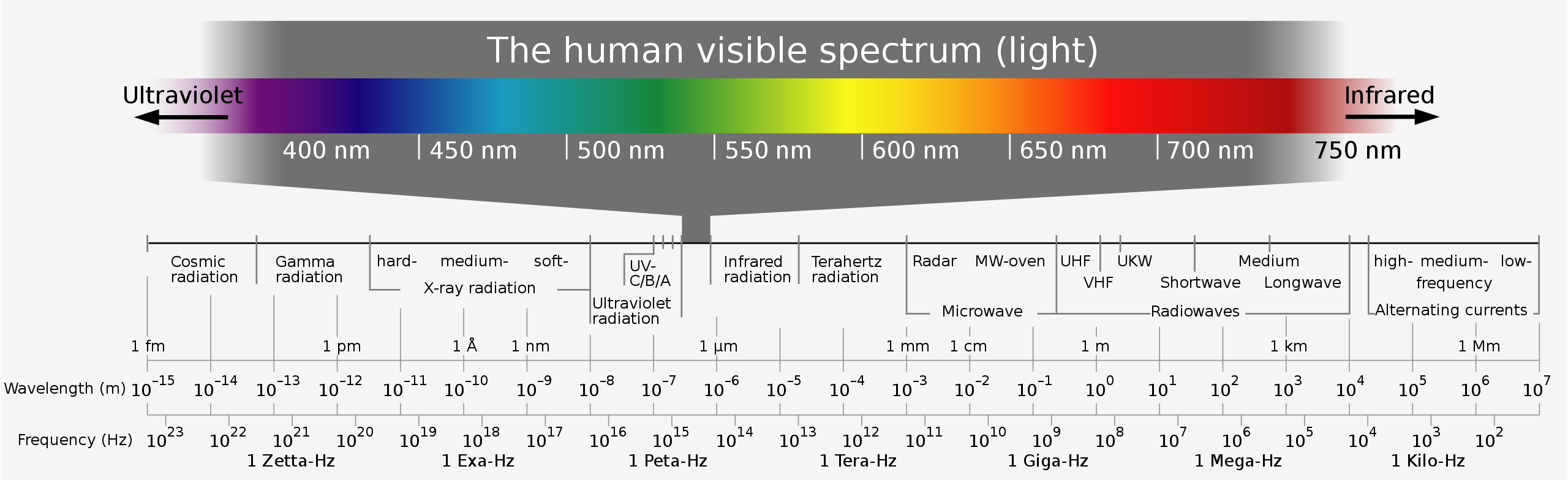
Likewise, many other types of EMR also exist (e.g., Gamma rays, x-rays, ultraviolet, visible light, infrared, microwaves, and radiowaves) which each have different properties. However, despite EMR being one of the fundamental constructs of our reality, much of its biological significance is still not recognized. For example, I feel some of the biggest misunderstandings about EMR are as follows:
•Natural light tends to have a fairly wide range of frequencies present within it (e.g., this is why sunlight splits into a rainbow once it passes through a prism). In contrast, artificial light tends to have a much narrower range of frequencies present within it which differs greatly from what biology evolved to handle.
•This is easiest to see by comparing bulbs. A standard white LED emits a sharp spike of blue at around 450nm, a broader hump of yellow, and almost nothing past 700nm. An incandescent bulb, like the sun, emits a smooth curve that keeps rising through the red and continues past 2000nm, so most of what it produces is infrared we cannot see.1
Note: since the government grades bulbs on visible light per watt, that infrared was scored as “waste,” which is how the incandescent bulb came to be banned.
•The label “ultraviolet” is given to the EMR that lies between visible light and x-rays. This implies all UV is the same, when in reality, each type of UV (UV-A, UV-B, and UV-C behave very differently) and are present in very different amounts (e.g., the atmosphere blocks most UV-C from reaching the surface of the Earth).
•Infrared penetrates much deeper into the body than UV (5-40mm vs. 0.02-0.15mm) and in 2025, researchers at University College London were able to measure the infrared in sunlight after it had passed through the human body and found that it created systemic effects. Additionally, standard glass (for the most part) blocks UV from traveling through it.
•Conventional science typically describes the adverse effects of EMR as being a property of how much energy the EMR has and if that energy is sufficient to break molecular bonds (termed ionizing energy). For example, gamma rays (which are released by nuclear weapons) are so dangerous because their ionization energy is so powerful they shred the molecular structures of the body (e.g., DNA) apart. Conversely, microwaves (which are instead on the low energy end of the electromagnetic spectrum) are deemed to not be dangerous because they contain too little energy to ionize molecular bonds.
•The previous point is not entirely correct because while EMR typically passes through whatever it contacts, if it instead “matches” that medium, it will store inside it and have a dramatically greater effect on it (e.g., this describes the concept of a resonance frequency). This is important because a wide number of critical living structures (e.g., mitochondria) evolved to have a resonance for a specific type of EMR and then respond to them while everything around them is largely unaffected by that specific type of EMR. Unfortunately, this aspect of science has been largely glossed over by our scientific apparatus, something I believe is due to the fact biophysics opens the doors to creating a variety of un-patentable medical therapies, and because it implicates a lot of the EMR we are now saturated in (e.g., the microwaves cell phones bluetooth and Wifi use) as a cause of poor health.
For example, radar works by sending out a large pulse of microwave energy in each direction (through the unit spinning around), and then using the reflections it receives from any radar pulse into the atmosphere to indicate the presence of an object being there. I personally think radar is far from benign as I’ve read numerous stories of soldiers stationed next to radar units (where the microwaves are exponentially stronger) becoming severely ill, I know many EMF sensitive people can tell if far away radar units are firing, and I personally can feel something when I am at an airport each time a radar sweeps by. While that seems abstract, I recently saw a brief video by John Ott that perfectly demonstrates the reality of this phenomenon:
Biophotons and Mitogenic Radiation
Note: in another article I wrote on this critical subject I highlighted how it underlies many of the therapies now used in regenerative medicine.
A fundamental principle within biophysics is that cells emit very faint photons (predominantly within the ultraviolet spectrum) they use to control growth and communicate with other cells and that when biophoton transmissions go awry, disease results (leading to abnormal photon emissions from tissue being seen in many disease states). For example, cancers have abnormal biophoton emissions, and (when studied) carcinogenic substances significantly disrupt the wavelength of these photons, whereas similar compounds that do not disrupt those biophotons are not carcinogenic (an observation which led Fritz-Albert Popp to create the discipline of biophotonics).
One of the most interesting observations made within biophotonics was that the cytopathic changes caused in a cell by viral infections or toxin exposures could be “transferred” to another cell in the immediate vicinity when the cells had no physical connection but were optically connected through a UV transmitting window, while conversely (as this Russian study shows), cells injured by radiation could be healed by being placed by healthy ones.
Note: when cells are irradiated, nearby unirradiated cells can also show radiation-like injury (known as the bystander effect). Recently, evidence has accumulated that ultra-weak biophoton emission contributes to the bystander effect.1,2,3
Likewise, in health, biophoton emissions cycle with the circadian rhythm (e.g., when a Japanese team imaged the light coming off the human body, it peaked in the late afternoon and stayed low overnight, even in volunteers kept awake under constant light1), whereas in chronic illness, Robert Naviaux (the researcher who pioneered studying the cell danger response) mapped each stage of the cell danger response to a characteristic level of emission the body becomes stuck at.1
Alexander Gurwitsch was one of the earliest researchers to study this. In 1923, he discovered that living cells (of both animals and plants) gave off extremely faint emissions which triggered the cells around them to leave their lag phase, enter mitosis and divide, leading him to name it mitogenic radiation [MGR]. After realizing that ordinary glass but not quartz glass blocked it, he concluded that MGR was a type of ultraviolet light (as this is how UV behaves), and much later, it was confirmed to be exactly that (with a wavelength between 190-350 nm).
Note: MGR is very faint (making it difficult to detect), and its emission from biological systems typically requires the system to be illuminated with light (which makes the faint mitogenic emissions much more difficult to spot). Eventually, roughly a decade after Gurwitsch’s death, researchers were able to capture this radiation with sensitive photomultiplier devices.
After studying it in detail, Gurwitsch realized that MGR required a very specific dosing and pattern (e.g., through being pulsed) to achieve its optimal effects, and that too much quickly became counterproductive (e.g., light UV exposure stimulated the growth of yeasts, while stronger UV exposure killed them). For example, light interrupted 100-800 times a second produced the effect in 13 seconds (versus 6-8 minutes for continuous light), while yeast responded to the UV from living tissue at intensities orders of magnitude lower than they did to UV from a lamp, and responded far better to a lamp emitting a mix of wavelengths than to one emitting a single spectral line.1
As this was very challenging to do artificially, the value of MGR was primarily in what it facilitated the diagnosis of (e.g., blood typically emitted MGR, but if someone had cancer it did not, and as a result, with a high degree of accuracy, the hospital he worked at was able to determine if someone had a cancer purely by assessing if MGR had disappeared from their blood). This was eventually traced to a peptide which appeared in the blood of cancer patients and quenched its UV emission (termed the “cancer quencher”), whereas in the other states where blood stopped radiating (e.g., fatigue, starvation, old age, diabetes or sepsis), this was instead due to metabolic byproducts which absorbed the UV, a difference the test could distinguish. In animals, the quencher appeared long before a tumor could be felt (e.g., in rats, 9-12 days after tumor cells were implanted versus 28-32 days) and disappeared within days of the tumor being successfully removed (while its persistence predicted a recurrence). Likewise, in the clinics which used it to screen newly admitted patients, both its sensitivity and specificity exceeded 95%, roughly thirty years before the first conventional blood tumor marker (alpha-fetoprotein) was discovered.1
Additionally, Gurwitsch and those who followed him (many of whom also were within the Soviet Union) found that:
•Both living tissue and enzymatic reactions (e.g., the synthesis of amino acids) emit MGR, while MGR (and UV light) can catalyze the synthesis of biochemical molecules.
•Once many biological substances (e.g., blood) were exposed to MGR, they would then emit MGR, which was termed “secondary MGR.” In many cases, secondary MGR was able to precisely match the frequencies and duration of MGR that were necessary for the best response to it in tissue throughout the body, and could significantly exceed the energy that had initially been received. I suspect this is why ultraviolet blood irradiation creates significant systemic effects but only works when a small portion of the blood is irradiated.
•Injuring or killing cells would cause them to release an intense flash of MGR which lasts for minutes, has a very different spectrum from typical MGR, and cannot be triggered again until the cell has recovered. Most recently, in 2025, physicists at the University of Calgary used cameras capable of detecting single photons to image the light coming off living things, and found it rose wherever a plant’s leaf had been injured, while in mice it dropped markedly once they died.
Note: I suspect the flash comes from exosomes being released from the cell (while conversely, it is recognized that biophoton signaling will cause cells to release exosomes1,2). Likewise, I suspect you often see such rapid systemic changes after therapeutic exosome infusions is because of the regulatory photons they release into the body.
•Faster-growing cells tended to be mitogenic while slow-growing ones were not, with the primary exception being cancer cells.
•Certain parts of the body (brain tissue, the cornea of the eye, active muscles, and blood) had much greater emissions of MGR (and muscles from frogs freshly taken from the wild emitted far more than those from frogs kept for months in an aquarium1).
•A dissected optic nerve was found to radiate mitogenic radiation throughout the optic tract when the eye was exposed to unfiltered sunlight.
Note: recent research supports this. When freshly isolated rat eyes (and separately their lens, vitreous humor and retina) were exposed to visible light, each re-emitted photons afterwards,1 while when light of various colors was shone on one end of a rat spinal nerve root, photon activity significantly increased at the other end, something a nerve conduction blocker (procaine) or metabolic inhibitors prevented.1 Likewise, the Müller cells of the retina are already known to guide light, and physicists at the University of Calgary have shown that the myelin sheath surrounding nerve fibers could allow them to function as optical waveguides.1
•Blood vessel walls were found to not block the transmission of mitogenic radiation, and within the blood vessel, MGR was best conducted when the vessel itself was energized, a quality likely imparted into the blood by the electrical charge of the heart.
-As tissue goes through different developmental stages its MGR changes (which suggests MGR helps guide growth and differentiation, something no biochemical mechanism has been able to explain). For example, as people age, their blood emits less and less MGR (and it temporarily declines after stress or exertion), and this may account for why their bodies have more difficulty healing from injuries.
Note: in the 1930s, researchers determined that partially restoring the MGR of an older person’s blood improved senility.
Another Forgotten Side of Medicine
Within 25 years of Gurwitsch’s discovery, over 700 papers had been published on it by more than a hundred researchers around the world (fewer than 3% of which failed to find the effect), Gurwitsch had been nominated for the Nobel Prize 11 times, and a future Nobel laureate (Dennis Gabor) had been among those who confirmed the radiation was ultraviolet. The research then stopped, as it was interrupted in Europe by World War II, increasingly dismissed in the West as “Soviet science,” and in 1948 persecuted within the USSR alongside genetics.1
It was never seriously resumed, even though physical instruments later confirmed the emissions his school had detected biologically (e.g., from onion roots, embryos, yeast, excited nerves, the working heart and malignant tumors),1 the author of a 1967 paper in Nature declaring MGR disproven went on to improve his equipment, detect it, and spend the next twenty years confirming the UV emission’s intensity, wavelength and timing matched what had been reported in the 1930s,1 and a physical basis for how such faint light could trigger cell division has recently being proposed.1
Sadly, while the subject of MGR has an immense number of important implications for biology, very few know of the topic now (even within disciplines like regenerative medicine where MGR modulating therapies significantly improve clinical outcomes), as like many other forgotten sides of medicine, the vast body of literature behind this unpatentable therapy could not keep it from being swept away in the sands of time.
Note: I consider one of the most important discoveries made by these researchers was that the eyes conducted MGR into the body.
John Nash Ott
Note: most of this section is a summary of Ott’s book Health and Light.
As plants move quite slowly, it is typically not possible to see their movement (although exceptions do exist such as plants that reflexively contract like Venus fly traps or if one is in areas where nature has an unusual abundance of vitality, with careful observation, it’s sometimes possible to see rhythmic movements in the periphery of a tree).
Time-lapse photography (where shots taken far away from each other are turned into frames for a motion picture) made it possible to accelerate this microscopic movement of plants and hence make it visible. One of the pioneers of time-lapse photography was John Nash Ott, who began working on it in 1927 (while in high school) and because of the popularity of newfound art, got a lot of business. For example, this is some of the footage in a Disney motion picture Ott was hired for:
Note: some of Ott’s flower time lapses can be viewed here and here.
Time-lapse photography was immensely challenging because it required maintaining a consistent frame and lighting for months (and sometimes years) at a time, but due to his talent, Ott (a very awake individual) was able to consistently produce results and remained in high demand for decades (whereas many others simply could not pull it off).
From doing this, Ott figured out a variety of ways to manipulate the movement of plants (e.g., many move towards sunlight), and got very serious about it. For example, this was a highly-regarded time-lapse video (slightly under 2 minutes long) he spent 5 years producing. Where he was able to make primroses “dance” and then “bow” to a classic waltz:
Through doing this, Ott realized the plants were reacting to the light he was using to film them (as he often used specific light filters to get the right color for each picture) and began to see that plants were exquisitely sensitive to both light in general and also depending on the plant, specific colors. As he began to explore the effect of light on plants, he then realized many similar effects could be seen in animals and humans. I will now list some of Ott’s most interesting discoveries.
Note: much of Ott’s work was predicated on the recognition that UV for the most part does not pass through glass, and he hence needed to use special types of windows (e.g., certain plastics) for natural light to be let in.
Light and Plants:
•Standard glass filters out the essential UV light many plants (and animals) depend upon. Conversely UV light produced the strongest and healthiest plants. For example, amplifying (e.g., by placing aluminum under plants which reflected the UV light in sunlight back up to plants), when tested on squash plants increased their yield five-fold and eliminated both viral and insect infestations from the plants.
Note: one of the most unexpected discoveries Ott made was that when he started leaving a full spectrum light with long wave UV on at night (to prevent burglaries) in a kitchen that happened to also have UV transmitting windows, he noticed that the orange and grapefruit trees outside burst into bloom out of season and bore exceptionally large fruit—which again signified a small amount of UV light could have a massive effect on plants. Likewise he also found certain fruits (e.g., apples) needed UV to ripen, while others (e.g., tomatoes) ripened in the darkness.
•Plants (e.g., tomatoes) that appeared to be sickened or dying from a contagious virus would recover and bear fruit once they received normal unfiltered sunlight—a recovery considered to be impossible by tomato growers.
Note: because of this observation, Ott thought there was merit in examining the pleomorphic theory of biology.
•Plants were often sensitive to very specific wavelengths of light. For example, morning glories would not open in the morning if they were exposed to red light during the night but if the red was filtered away, nighttime light exposure did not prevent them from later opening.
•The same pumpkins will have flowers of both genders. Ott discovered that while under a skylight and a supplemental fluorescent light, their male flowers grew while the female ones withered and died. The next season, when he used a different bulb (daylight-white tubes) with a bluish glow, the opposite happened: the female ones thrived while the male flowers died.
•X-rays (emitted from the ends of most fluorescent light tubes and the older cathode ray televisions) would cause chaotic and disordered growth (e.g., beansprouts would often have their roots grow upwards—something Ott concluded was due to the natural direction of their growth having evolved to be opposite to the background x-rays, as since those come from the sky, this would typically direct the roots into the ground).
Note: interestingly, the X-rays which affected plant growth were too small for the instrumentation of the time to detect (which highlights why many of the arguments about the safety of low strength electromagnetic fields (EMFs) aren’t biologically sound).
Later, Ott learned that wheat seedlings on the international space station grew similarly to the plants he exposed to X-rays, which Ott attributed to their increased multidirectional exposure to cosmic rays.
Note: The Secret Life of Plants (which can be watched here) also demonstrates the extraordinary sensitivity of plants to their environment.
•Certain plants needed to first “sleep” in darkness (otherwise they would not bloom), and in some species Ott studied, this sleep needed to occur during the night (e.g., putting them in a pitch black room during the day would not help them to bloom). Ott then tried putting them at the bottom of a 650 foot coal shaft (as this largely blocks the cosmic radiation from the sun that is present during the day) while illuminating them with incandescent bulbs (which do not emit cosmic radiation) and observed the plants immediately went to “sleep” which indicated plants are quite sensitive to the trace levels of cosmic radiation in our environment. When he instead put them at 100 feet down the shaft (which partially shielded them from cosmic rays), a partial response instead occurred, as the plants still appeared to go to sleep but were much less responsive to opening in the morning once they were brought to the surface.
Note: the reason a circadian rhythm (which is maintained in complete darkness) and the need for sleep exist in almost all living organisms is still somewhat of a mystery. I believe Ott’s experiments help shed light on where parts of it is actually coming from.
Light and Cells:
Ott studied plant cells (from Elodea grass) under a microscope and discovered that when exposed to full spectrum light, all their chloroplasts (the structures that perform photosynthesis) would stream through the cell in an orderly fashion (an example of which can be viewed here). Conversely, when he removed UV from that light, many chloroplasts would leave the stream, clump together, and stop moving, while when he also added a red light filter to his microscope (which made the light red by removing the non-red light), more chloroplasts would stop moving, while others would take a shortcut and cut through the cell. When he tried a green filter, the shortcut pattern changed and some of the chloroplasts would resume moving, while when a blue filter was used, their motion mostly returned to normal. Then, when the filters were removed and long UV was added, the normal motion immediately resumed (however if excessive UV was added, the cells would rupture). Finally, regardless of what he did, the chloroplasts gradually slowed down and would not resume moving until they had a dark period to “sleep.”
Note: I believe some (but not all) of Ott’s observations would have been explained by the spontaneous flow liquid crystalline water creates.
These results then inspired him to study the effects of different light in animal cells.
Under a microscope, he looked at the pigmented cells within the retina (from rabbit eyes). There he found:
•Their pseudopodial activity (movement preceded by the cell’s membrane stretching out like an arm which essentially creates the appearance of it walking along) would become abnormal under shorter wavelengths (e.g., blue light), while longer wavelengths (e.g., red light) would cause the cells’ membranes to rupture and their contents to spill out.
Note: using near infrared spectroscopy, researchers recently found that blue light (420nm) at the levels present in our everyday environment destabilized mitochondrial metabolism in the mouse retina, and that this persisted for at least an hour after the light was turned off.
•Their cellular reproduction (mitosis) would stop after being exposed to red or blue light for approximately three hours, while full spectrum light instead helped the cells reproduce.
•Like the plant chloroplasts, the activity of their pigment granules would slow down at the end of the daytime period and would require a dark period uninterrupted by light before resuming their normal response to light energy.
•After a 12-hour continuous exposure to ordinary incandescent light each day for one week, an estimated 90% of the pigment granules became sluggish in their action and remained virtually motionless at one end of the cell until a bit of long UV was added (at which point the pigment granules would become active again and resume their normal movement within the cell).
Note: it’s not clear to me how Ott defined long UV, as he implied it was UV with a wavelength greater than 290nm (which is both UVA and most UVB) and that it was blacklight UV (which is near the visible boundary of UVA).
•When he studied chicken embryo heart cells, he consistently found that blue light (which is often present in laboratories) caused them to go through contortions, whereas, like the pigmented retinal cells, red light weakened their cell membranes and caused them to become more likely to burst.
Note: Ott then showed these changes to a few experts and reported: “Several well known virologists have commented that this reaction resembles cells being attacked by viruses.”
Additionally, Ott also cited the work of researchers working with slime molds who found that for them to sporulate, they had to be in a chamber for a few hours and exposed to cool light (e.g., yellow and green), whereas if they were exposed to warm light (e.g., orange pink), they did not grow.
In short, Ott found it remarkable that he could induce a greater change in cells (e.g., through increasing their metabolism or killing them) by varying what light the cells were exposed to than with the tranquilizer drugs he exposed the cells to.
Note: footage of Ott’s cell experiments can be found in the video at the end of this section. Additionally, different types of fluorescent light exist. Commonly, they have a yellow-orange color to give their light a warm feel as that is often people’s preferred color. In Ott’s experiments, he typically compared the effects of cool white fluorescent lights, daylight white ones, and pink ones.
Light and Animals:
Gender Differentiation—Since light had a gender based effect on the sexual development of a pumpkin, Ott decided to explore the effect in animals through having fish tanks undergo long-term exposure to pink fluorescent light. From this, he found if those fish laid eggs, the new fish that hatched would all be female (although about 20% developed stunted male characteristics as they aged—suggesting they were more intersex than female). In total, they found the results held true for the 50 fish they hatched (many of which had different parents).
Note: all embryos begin as being female, however in males, the androgen gene (the Y chromosome) activates and transforms the developing embryo into a male. In turn, many classic cases of transgenderism result from a defect in this process (e.g., the cells do not respond to androgens like testosterone which prevents male development from occurring)
This experiment was then repeated by a chinchilla breeder who needed more females (2 had recently died and in the last three years, 9 males and 1 female had been born). As she had been using a frosted incandescent bulb (which blocks a significant amount of their light spectrum) alongside a distant window at the end of the room for illumination, Ott sent her two transparent incandescent bulbs, which were received at somewhere between a third to halfway through their gestation and then turned on. Eight weeks and one day later, he received a letter of gratitude stating 3 females had been born—indicating the lights had exerted their effect during the pregnancy (rather than on the male or during conception). This was then followed by another letter several months later stating the next litter were all females (which presumably had instead had that light throughout their entire pregnancy).
Later, in April 1970, Ott worked with the Kline Chinchilla Research Foundation to complete a 5-year study which over 2000 chinchilla breeders participated in. They found that when the standard incandescent light bulbs were used in the breeding rooms, the litters would average 60-75% males, whereas when “daylight” incandescent bulbs were used, the ratio of males to females would be reversed and average 60-75% females.
Note: Ott also repeated this experiment in horses but I was unable to find the final data for it.
Animal Fertility:
•In the fish experiments (which were not receiving any natural light), Ott also discovered that the fish would not lay eggs until he reduced the light intensity and only had the lights on for 8 hours a day.
•When Ott bred rabbits, he found he got much better results from natural UV light (through UV transmitting windows) than with artificial lighting.
Note: this approach also yielded an “almost unbelievable improvement” with breeding rats and mice.
•When female minks do not get pregnant after mating, they often get an injection of a pregnant mare serum before attempting the second mating. When minks were exposed to blue light (from being behind blue glass), they all became pregnant on the first mating. Conversely, when behind pink glass, after three attempts (and hence two injections) only 87% became pregnant, while 90% of the male minks were classified as “non-working.”
•Suspecting the x-rays from cathode ray color TVs could affect animals, Ott discovered that once he placed one in the vicinity of his animal breeding program, significant disruptions occurred (e.g., rats went from having 8-12 young to 1-2 young per litter—many of whom then did not survive), and it took 6 months for breeding to return to normal once the TV was removed.
Note: as discussed below, Ott also discovered ways to improve animal fertility.
Light and Animal Health:
•In a group of 536 mice born under natural UV light, 97% survived to maturity. In a group of 679 born under fluorescent light, 88% survived to maturity, with the highest survival rate (94%) being seen in those who lived under cool white, warm white, and daylight white lamps, and the percentage noticeably declining under different, deeper-colored lights (with the lowest rate, 61%, resulting from exposure to pink fluorescent lights).
•Rats raised in total darkness had fur that was soft and smooth in texture, quite thick and fully developed. Rats of the same breed exposed to artificial lights instead had coarse and extremely bristly fur. Additionally, many of the rats raised under daylight white fluorescent light were completely bald on the tops of their heads and often down the ridge of their backs. In parallel to this, the large chinchilla study found if their periods of darkness were lengthened, it would trigger the development of their heavy winter fur, which is what they are often bred for.
•Two breeds of research rats that frequently develop tumors also often inexplicably have their tails gradually become necrotic and fall off. When one breed was kept under pink fluorescent lights for 12 hours a day, within 3 months, they would become spotted and develop sores, which then went away within 30 days if the rats were returned to natural light. However, if they were instead kept under the pink light for 6 months, the tail gradually became gangrenous and, bit by bit, sloughed off until there was a complete necrosis of the tail—which curiously had no bacteria or fungi within it.
•Those rats exposed to pink fluorescent light also developed excessive calcium deposits in their hearts (calcific myocarditis), were more tumor prone, had smaller litter numbers, and had challenging behavioral problems.
•Mice kept under dark blue fluorescent light had higher blood cholesterol levels than mice kept under red light. Additionally, many of the male (but not female) mice under blue light became obese.
Note: in a 2025 study, mice exposed to the 420-450nm blue light which dominates LED bulbs were found to gain weight rapidly compared to controls, while in a 2019 study fruit flies raised under white LEDs lived half as long as those kept in darkness, a loss which almost entirely disappeared once a yellow filter removed the blue.
•Ott noted an aquarium had been using the same blacklight UV lamps (originally for decorative purposes) that Ott had found benefitted his research animals. He inquired and found out that this light addressed a major problem in their fish—exophthalmus (the eyes popping out), a condition attributed to a virus that curiously was rarely seen in fish kept outdoors and subject to natural lighting conditions.
•Ott discussed reports from Manitoba, Canada, of dairy herds, located within two miles of telephone microwave relay towers, giving considerably less milk, poultry producing only a fraction of their usual egg quota and flocks of chickens going into sudden, unexplained hysterical stampedes.
Note: more recently, many have also argued cell phone towers have played a major role in the decline of bee populations.
•In addition to disrupting fertility, Ott also discovered that the X-rays from (older) colored TVs caused all the young rats around it to die in 10-12 days. Two rats that appeared extremely lethargic and almost dead prior to their demise were then professionally autopsied at the moment of their death, at which point several instances of brain tissue damage were discovered.
•For seven years, one shed at a mink farm inexplicably had experienced a significant increase in the young born in the litters there alongside a significant improvement in the condition of their fur. As this increased the farm’s revenue, they tried to figure out what was causing it, but other than establishing the worst performing minks likewise improved when put into the shed, it remained a mystery. After Ott investigated, he realized it was due to an adjacent building having an aluminum siding (whereas the other ones were next to buildings with iron sidings), and since only aluminum reflects UV, Ott measured the farm and determined a significantly higher UV level was present in that shed.
•Ott cited a 1971 study of golden hampsters which found that when hampsters were fed a cavity provoking diet (a high carbohydrate one containing 60% sucrose), those that spent 12 hours a day under fluorescent light with UV added (to approximate natural light) averaged 2.2 cavities, whereas those under cool white fluorescents averaged 10.9 cavities. Additionally, the cool white light resulted in an 80% reduction in the development of their male sex organs.
Note: UV light exposure also increases agricultural productivity as hens will lay significantly more eggs, are less likely to become sick, much less likely to die, and will grow faster (e.g., a 1953 study found it caused young chicks to typically gain an additional 30-40 grams), to be much less likely to develop disease, to require less feed, and to not have their egg laying decrease in their second year of life. Similar benefits (e.g., increased egg laying) have also been found in turkeys.
Animal Cancers:
Note: much of the research Ott referenced in his book was never published and instead simply learned of by communicating with the researcher.
•A study exposed rats to carcinogenic chemicals and different light conditions. Those in total darkness had the least cancer, while those living under daylight mimicking fluorescents had significantly smaller and less frequent tumors than those under incandescent bulbs.
•A mouse study designed to study malignant melanoma found mice kept under simulated daylight develop tumors at a slower and diminished rate compared to those under cool white fluorescent light.
Note: fluorescent light exposure has also been linked to melanoma in humans.
•Another study of mice that were highly susceptible to cancers, had 30 pairs kept under daylight white fluorescent lights, 30 pairs kept under pink fluorescent lights and 8 pairs which instead received daylight filtered through standard window glass. The pink group developed cancer the fastest, the daylight fluorescent group took a month longer, while the window group took 2 months longer. Ott did a follow up to this with 2000 mice and found out that on average, mice under a pink light developed cancer and then died in 7.5 months, while as the light was improved, their life span progressively lengthened (up to 16.1 months).
•Another experiment transplanted tumors into mice, and found that for slow growing tumors, those kept under natural light had an average life span of 43 days whereas mice kept under cool white fluorescents had a lifespan of 29 days.
Note: no difference was observed for fast growing tumors.
•When approximately 500 minks were kept behind pink glass, and 500 were kept behind blue glass, 4 of those exposed to pink light died from a strange illness that the farmers had never seen before, with their autopsies showing what appeared to be a cancerous condition of the abdominal area including a number of vital organs.
Note: due to unforeseen circumstances, a pathological examination of those organs was never performed.
Animal Behavior:
•When breeding lab rats (or mice) it is standard procedure to remove the male from the cage before the litter is born so he will not eat them. However, when provided with natural light, he instead cared for the young (especially when the mother was gone) and was much more docile and friendly (and less likely to bite) than those kept under fluorescent lights.
Note: a frequent cause of leaks from Biolabs (e.g., the controversial bat lab being built in Fort Collins CO) are the animals biting lab workers.
•Animals kept in captivity (e.g., reptiles birds and mammals) were less likely to attack each other if kept under blacklight UV. Ott specifically discussed witnessing this in regards to fin-nipping (which had been a problem at an aquarium until black lighting was brought there), and noted that it has gradually become recognized that blacklights have made it possible for many fish that could never previously be kept in captivity to now be kept in aquariums.
•A report from the Houston Zoological Gardens in Texas (published in the 1969 International Zoo Year Book by the Zoological Society of London) reported that a number of reptiles and amphibians became noticeably more active when the cool white and daylight white fluorescent tubes in their cages were replaced with full-spectrum lighting, and that snakes that had previously refused to eat (including a rare type which was very difficult to keep alive in captivity) ate once put under those lights.
•After a Syracuse, New York zoo installed a new light to stop vandalism, many animals there started acting like it was spring and began mating (e.g., cougars, geese, lambs, deer, bear, kangaroos and chimpanzees) and in turn had many offspring.
• After 4 years, a Bronx, New York zoo was able to get puffins to breed by installing a full-spectrum lighting system.
•A 1969 study evaluated how often mice would voluntarily run on a wheel and found those in red and dark environments ran the most, followed by the yellow group, followed by those in a blue-green and daylight colored environment. Additionally, albino mice had the greatest response to the different colors.
•When minks were kept in a pink environment, they became increasingly aggressive, difficult to manage and in many instances actually vicious, whereas in a blue environment, they became friendly and docile, and in thirty days could be handled with bare hands like ordinary house pets.
•Rats exposed to cathode ray TV x-rays became increasingly hyperactive and aggressive in 3-10 days, and then became progressively lethargic, and at 30 days they needed to be pushed to be moved. Shielding significantly reduced this, although an incomplete result may have resulted from another unshielded TV in the vicinity, which Ott hypothesized (due to studies such as this one) was a result of acetylcholine release (as at low and then high levels it triggers each of the behaviors observed).
Note: this study is interesting because I have seen very similar behavior occur in humans.
•Ott cited Dr. Susan Korbel from the University of Arkansas reporting laboratory rats “dancing around” and acting “as though they had been given a type of nerve gas used in World War I” when they were subjected to low levels of microwaves.
•A study evaluating the effect of stress on a propensity for alcoholism perplexingly found rats preferred water on weekdays, but alcohol on weekends. After this was eventually correlated to the lab being completely dark on the weekend, a group of non-stressed rats were kept in the darkness (where they then developed alcoholism), which was followed by rats not kept in the darkness or exposed to stress being given pineal melatonin injections (as this is released during darkness) and them also becoming alcoholics.
All of these animal results are quite shocking, and Ott argued that any animal experiments must control for the light conditions in order to be reproducible. Sadly, decades later, the inability to reproduce experimental data is still one of the largest issues science faces (and very little thought is given to the unhealthy lighting used in research labs).
Light and Humans
Each of Ott’s findings in plants and animals in turn generalized to humans and led to a number of remarkable discoveries.
Glasses:
After working with plants under artificial light conditions for two years, Ott gradually developed arthritis in his hip and a great difficulty walking, at which point he tried everything he could to identify the cause of the arthritis or to create a cure for it (including lots of sunbathing—which rather than helped him, made him worse). At one point, his glasses broke, and because he did not like his replacement, he decided to do without glasses, at which point he noticed an immediate and progressive improvement in his condition, and before long feeling better than he had in 4 years and regaining his mobility (which was later confirmed by hip x-ray and a doctor’s physical exam). This, in turn, led him to suspect a primary route of light to his body was the eyes (as sunbathing had not helped him at all—rather it made him worse) and that the UV blocking properties of his glasses had created major issues for him (as he had worn sunglasses both while driving to the beach and while sunbathing).
After some investigating, he discovered that:
•Reducing his time in a studio, being under a television studio bright light from 2 hours to 40 minutes helped him, but each time he did that or drove while looking through a windshield he still felt worse.
•This regimen (healthy light reaching the eyes) also addressed the increasingly common head colds and sore throats he’d experienced over the last few years that no remedy had worked for.
Note: as discussed here, I believe one of the key characteristics of a viral upper respiratory infection is a lowering of the physiologic zeta potential.
•He had a friend follow his healthy light regimen and their hay fever vanished.
•He encountered someone who’d worked for him, who had since been on an assignment that required being in a lot of intense indoor artificial lighting and had not only become diabetic from it, but had his diabetes cause blood vessels in both eyes to burst and make him to almost blind. Because of this, he’d taught himself to read braille and had been reassigned to the photography dark room, but sadly had continued to have additional blood vessels in his eye burst. Ott suggested the regimen, and after 6 months, there had been no additional blood vessels burst and he had partially regained his sight.
•Ott met someone who had Graves disease (an autoimmune thyroid disorder that causes the same eye swelling seen in the fish) and was not responding to radiation treatment. On the chance it could save her sight, she tried Ott’s full spectrum regimen, and her eyes healed. Ott then learned that her husband was having issues with recurrent skin cancers (which his doctor had recommended against additional surgery for), so he had him fix his eyelight exposure, get more natural light and stop watching television, and after 5 months, his skin became normal.
•Ott found a study of Cree Indians in northern Manitoba, Canada, who had an exceptionally high rate of pterygium (abnormal growth of tissue in the eye) who he then discovered had also been given specially designed sunglasses to block sunlight from damaging their eyes. Ott then searched for people who had developed pterygium while on military duty in the tropics, and in his small sample found all had worn prescription sunglasses.
•Ott found out that when the eyes are blocked from receiving UV (including where one is but the other is not through customized contacts or glasses), the UV deprived pupils will dilate to let more light in (resulting in different sized pupils when UV is present but one eye is blocked from getting it). This both makes sunglasses appealing (as a more dilated pupil gives one a more vivid perception of their surroundings) and suggests that the body has a regulatory mechanism to ensure it gets enough UV light from the environment.
•Ott found a study that showed 7-10 days of exposure to an ordinary (110 lux) light bulb could damage eye cells, but if the eye cells were instead exposed to a 1500 lux bulb with a green filter on it, severe damage occurred in 40 hours. Ott also identified reports that showed exposure to continuous green light damaged the eyes of several types of rats, mice, hamsters, and the Galago monkey.
Note: many sunglasses use green filters.
While Ott’s belief that glasses deprive the eyes of wavelengths they need never gained traction in medicine, ophthalmology recently arrived at a version of it. In a series of studies since 2017, Japanese researchers found that violet light (360-400nm, right at the edge of UV) suppresses the progression of nearsightedness, and that children who wore eyeglasses (which block it) had their eyes elongate faster than children wearing contact lenses which let it through.1 They traced this to a violet-sensitive photoreceptor in the retina (OPN5),1 and when they measured violet light around Tokyo, found it was abundant outdoors and essentially absent indoors, as windows, eyeglasses and modern lighting all filter it out.1
Note: my present hypothesis is that the eyes (via natural UV light entering the optic nerve) serve as one of the primary sources for mitogenic radiation to enter the body (given what the previous MGR research showed) and it is also very likely they serve a similar function for other essential frequencies of light (as various schools of medicine have established introducing different colors of light into the body produce therapeutically relevant effects).
Cancer:
•At an African hospital, Ott learned there had been a surge in cancers (whereas previously there had been none) and that while there had been no change in their lighting during this period, sunglasses had become a status symbol that people in the area had started regularly wearing.
•After he convinced a doctor to have 15 cancer patients follow his light regimen over the summer months of 1959, it was determined that 14 of the 15 did not have their cancers progress (the one who did had still worn regular glasses), and several had shown possible improvements.
•Ott learned of a school that had the highest rates of leukemia of any school in the country (5 times the national average). After investigating, Ott learned all of it had occurred in two classrooms, and in both of them, to avoid an outside glare from a nearby glass building, their teachers had closed the curtains for the room and switched to using artificial lighting in the room which happened to be warm (orange-pink) fluorescents. After several years (prior to Ott arriving), those two teachers left, and the new teachers switched back to sunlight in parallel with the bulbs being switched to the cooler fluorescent color. This in turn resulted in a complete disappearance of the leukemia cases and it being labeled as an unsolved mystery.
•Ott learned of a man in his early seventies who had just been diagnosed with terminal lung cancer who wore sunglasses most of the time and was sent a copy of the regimen Ott had used. His cancer disappeared and he lived for 8 more years before dying from a heart complication.
•Ott learned of a patient with recurrent cervical leukoplakia (a precancerous condition) who had been advised to get a hysterectomy. She decided to do the light regimen, her remaining leukoplakia shrunk (and was eventually removed), and had no further recurrences (hence avoiding the surgery).
•Ott spoke to an elderly man who had prostate cancer and was scheduled for surgery who had been wearing pink tinted eyeglasses. After correcting his glasses, cutting down television and being outdoors, his cancer disappeared on its own.
•Ott learned of a patient with a rapidly progressing cancer which was expected to be fatal in 4 months. Ott changed the lighting in his hospital room and at his home, and the man ended up living for 10 months, was free of pain (which is often a major issue in these types of situations) and was highly active until he died.
•Ott learned of an older woman who had a fast-spreading terminal cancer and had a small ozone generator (which uses UV light) set up in her room which was missing a covering and hence continually shined UV light into her room. Two years later, she was in excellent health.
Note: this may have also been an effect of the ozone or negative ions being generated.
Health and UV Lighting:
•Ott found a restaurant where for decorative purposes, everyone worked continually under active blacklight, and rather than become ill, they had been in peculiarly excellent health (even when flu epidemics swept through the area), and were a remarkably happy, courteous and efficient group where everyone seemed to get along well together. Ott in turn used their UV exposure as his initial blacklight dose for the animals he studied.
•During 1968-69, a flu epidemic swept the country, with 5% of those in his county being sick at one time (leading to many businesses temporarily shutting down). The one exception was a manufacturer who employed 100 employees, who never had someone get ill, and coincidently had recently switched to UV transmitting windows and full spectrum lighting. Following this change, it was also observed that employees became much happier and work productivity increased by 25%.
Lighting and Human Behavior:
•Ott learned of a radio station where the white fluorescent lights throughout the station were replaced by pink ones to “brighten the mood,” and after two months they began to develop personnel problems (e.g., poor performance on air, becoming difficult to control and at odds with the management and two resignations being received). At some point, a male employee said “If those pink bulbs aren’t removed I’ll go out of my mind,” which management immediately responded to (replacing all of them with white lights) and within a week, all the personnel problems were resolved.
•Ott learned of a survey of 300 college students to determine if they wore colored contacts or glass lenses, and found out that the three students who wore pink colored ones were also considered to be the most psychologically disturbed students in the college.
Note: I have met a few people I believe this process was at work with.
•Ott also learned of a college football player who had been hyper-aggressive and helmet throwing, who 30 days following Ott’s suggestion to stop wearing pink tinted glasses became a very relaxed and confident person whose football performance significantly improved. Additionally, he also learned of another player on the team whose performance mysteriously regressed, and once it was tagged to him installing psychedelic red lighting in his dorm room (which was removed) his performance on the field returned.
Note: workers who work in red colored rooms have been found to have elevated anxiety, distraction, dysphoria annoyance and stress scores (which reduce when they go to rooms with different colors).1,2,3,4,5
•In 1964, a news story swept the nation of 30 children who had developed nervousness, continuous fatigue, headache, loss of sleep and vomiting but after an extensive workup (e.g., for infections or contaminated food or water) the only commonality found was that they all were watching television for 3-6 hours on weekdays and 6-10 hours on weekends. Their doctors recommended cutting all TV, and in the 12 who did, all recovered in 2-3 weeks, whereas for those 18 who cut it down to 2-3 hours a day, it took 5-6 weeks for recovery, and with 11 then going back to normal TV viewing and having their symptoms return.
Note: because the media is much more corrupt now, stories like these never reach the airwaves.
Ott in turn suspected this was due to the x-rays being emitted by the cathode ray tubes inside televisions (which had greatly increased since color TVs needed three operating at a higher voltage than the single one within a black and white TV), and began the previously mentioned studies which demonstrated many color TVs were emitting x-rays which were significantly harming plants and animals. Following this, Ott was sent to a newly created school for children with learning and behavioral difficulties, measured the x-ray emissions of the TVs in their homes, and found many had unexpectedly high emissions. They were promptly removed, and two months later significant behavioral improvements were noted in those students, resulting in many being allowed to return to their normal classes.
Note: since x-rays were also emitted from behind the television, one of the improved children was a little girl who had been sleeping next to a wall that was behind a defective TV.
•In 1973, Ott conducted a pilot study in a Chicago school where two out of four classrooms had their cool fluorescent tubes replaced with full spectrum fluorescent lights whose ends were shielded to prevent x-ray transmission and electrically shielded (to ground them and prevent their radio transmission—as Russian research had shown fluorescent radio waves altered human EEGs). The students were then monitored with randomized time-lapse photography (so the teachers would not know when to tell the students to behave).
Students (e.g., first graders) under the normal lighting demonstrated nervous fatigue, irritability, fidgeting, flailing their arms, jumping out of their seats, frequent lapses of attention, and other hyperactive behaviors, but once the new lighting was installed, within a week those under it had a marked improvement in their behavior. Initially, they settled down, paid more attention to their teachers, and became less nervous. Over the next few months, the youngsters appeared calmer and far more interested in their work (e.g., one boy who had been in constant motion and was inattentive to everything became quiet, able to sit still and concentrate and had become capable of independent study to the point he’d taught himself to read while the experiment was conducted).
Note: following this study, Ott reported that similar results had been obtained from two schools in California and that in his original group, the students who received healthy lighting were later discovered by their dentists to have had one-third the number of cavities.
Finally, those who would like to know more about Ott’s work, this is a documentary Ott put together. It was uploaded by someone with whom Ott had shared his wish for the world to know about this knowledge so it did not become another forgotten side of medicine.
Ott’s Legacy
No one in science has made a major breakthrough in science by conducting double-blind studies. Breakthroughs are made by careful observation—John Ott
Ott found himself in a rather peculiar situation. While much of his research threatened the prevailing interests (and hence was destined to be buried—for example, the schools refused to continue his miraculous lighting regimen for their students), there simultaneously was a great deal of interest from the scientific community in his time-lapse photography. Because of this, Ott continually had windows to share his research with scientists around the world and was gradually able to create an independent center to further his research.
On one hand, he had some success (e.g., he played a pivotal role in getting the most dangerous TVs taken off the market and he was responsible for getting full spectrum lighting onto the market) but simultaneously, he ran into continual road blocks and despite his best efforts kept on ending up at blind alleys because institutions he’d work with decided they just could not publish his data (often for spurious and unscientific reasons). Nonetheless, because of how remarkable his insights were, they are periodically shared within the alternative medical field.
I would now like to highlight a few of Ott’s discoveries mentioned in the previous section.
First, given how harmful glasses could be for humans, it appears that the eyes serve a vital function in allowing natural light to nourish the body. Ott argued this was because the eyes were directly connected to both the pituitary and pineal glands and that these critical glands became abnormal without healthy light exposure. While I agree this is a major issue (e.g., we often find getting a patient well requires restoring the normal function of one or both of these glands), I do not believe this is the primary reason why exposure of light to the eyes is so important.
Second, in many of his microscopic observations, Ott noticed that the mere application of light created spontaneous motion within the structures he observed.
Third, Ott (along with scientists around the world, particularly those in Russia) believed our species was suffering a widespread chronic epidemic arising from a widespread deficiency of sunlight which in turn caused a variety of severe issues throughout the body.
Fourth, Ott believed that different parts of the body were highly sensitive to minute amounts of light (or EMR) at very specific frequencies. Likewise, he also suspected the effects of many drugs and pathogens were mediated by which specific frequencies of light they absorbed or reflected, a conclusion many others have also arrived at (e.g., a wide range of photosensitizing drugs exist and many believe red food dyes cause hyperactivity because they create red light within the body). It’s worth noting that a longstanding practice of medicine which utilized a variety of colors previously existed in the United States (which a few of my color-inclined colleagues still utilize with great success). This for example was from a 1939 reference about the therapy:
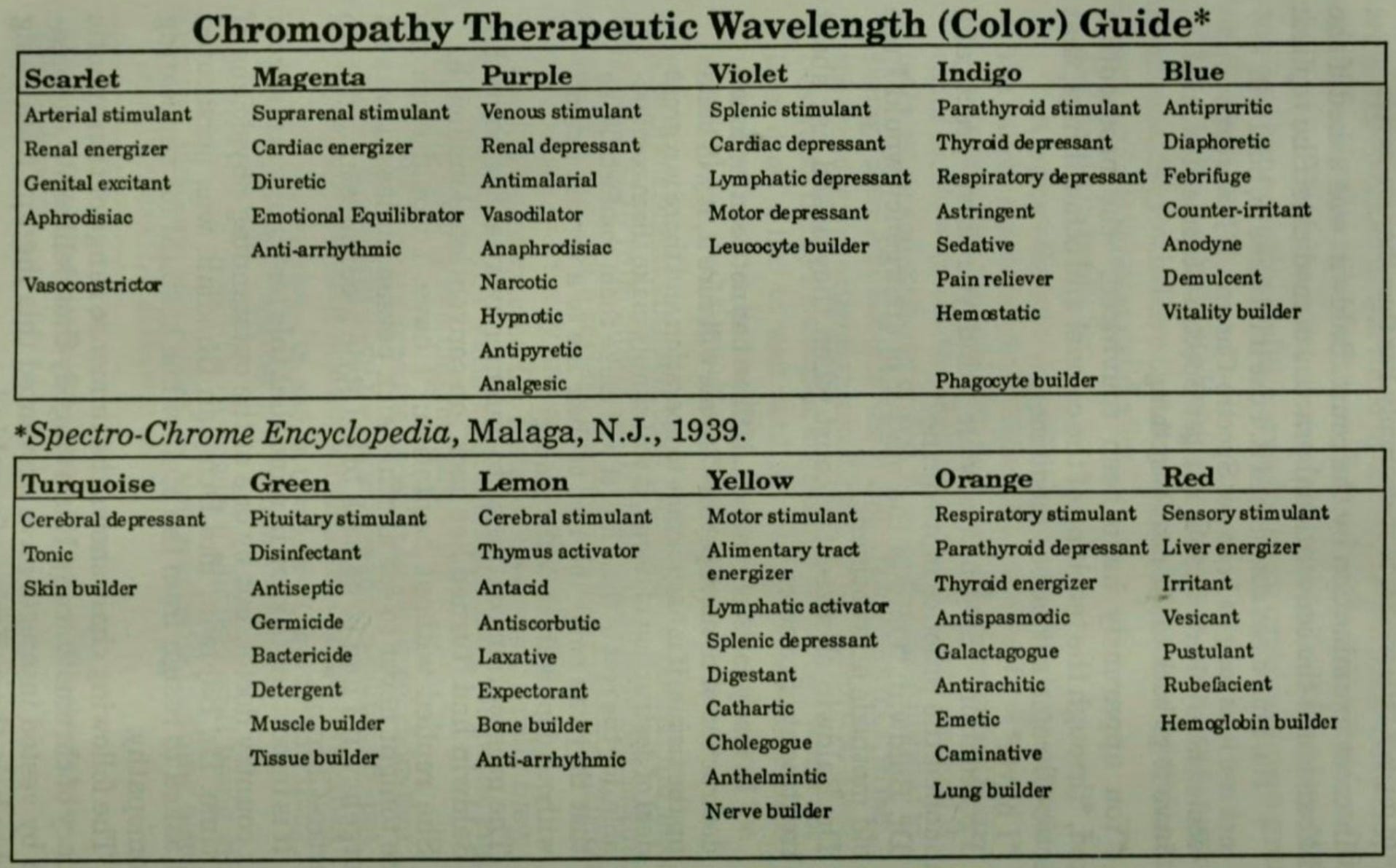
In contrast, we live in a world where artificial light produces very specific wavelengths of light which are both much stronger (in that wavelength) than what the body would typically be exposed to, which results in certain aspects of biology being over-activated and others under activated. Likewise, one of the key points Ott tried to demonstrate is that the trace amounts of background radiation we are exposed to, rather than being harmless in reality exert very real effects that correctly designed biological systems can easily detect.
The Incandescent Bulb Ban
For over a century, the light most Americans lived under at night came from a heated filament, which (like the sun or a fire) emits a smooth spectrum that is mostly infrared. In 2007, Congress passed a law which, if the Department of Energy did not finish its own lighting standards in time, required it to prohibit the sale of any general purpose bulb producing less than 45 lumens per watt. In 2022, the Biden administration put that prohibition into effect, and in 2024 finalized a second rule which raises the minimum to roughly 120 lumens per watt in 2028.1 As incandescent bulbs produce 10-18 lumens per watt,1 this was a ban, and the 2028 standard will eliminate almost everything besides LEDs.
Note: we have also been gradually replacing our (orange) sodium vapor street lamps with white LED street lights (which I greatly dislike). In 2016, the American Medical Association put out guidelines warning against the blue-rich LEDs most cities were installing, as the existing evidence showed they are at least five times more powerful at suppressing melatonin than the lamps they replaced (whereas wood fires and low wattage incandescent bulbs do not have this effect), brighter nighttime lighting is linked to poor sleep, obesity, and possibly cancer, diabetes and heart disease, their intense blue light scatters within the eye (creating a glare that worsens nighttime vision for drivers) and can damage the retina, and they disorient nocturnal wildlife (e.g., birds, insects, sea turtle hatchlings and migrating salmon). Residents in turn complained of a “prison atmosphere” and needing heavy drapes to sleep, and Davis, California paid $350,000 to replace its new lights. The AMA hence advised only using warmer (3000K or lower), shielded and dimmable LEDs, which are just 3% less efficient.1,2
The problem is what a lumen is. It does not measure light, but rather how bright light appears, using a curve adopted in 1924 that weighs each wavelength by how strongly it registers in our daytime vision. Green and yellow hence count the most, blue and deep red count for very little, and violet, ultraviolet and infrared count for almost nothing. That curve however only describes one of the things the eye does with light. Decades after it was adopted, a separate set of light-sensing cells was discovered in the retina which set the body’s clock rather than form images, and respond most strongly to blue light around 480nm (which the lumen curve counts at roughly one-seventh the value of green), while the violet-sensitive receptor discussed earlier responds to light the curve does not count at all. Likewise, it has nothing to say about the red and infrared the rest of the body (or mitochondria within the eye) absorbs. So under this standard, a bulb that puts most of its energy into infrared is wasting it, one that produces a narrow band of visible light and nothing else is nearly perfect, and the blue spike in an LED registers as a minor part of its output despite being the part the body’s clock reacts to the most.
In 2023, 248 scientists who had collectively published 2,697 papers on light and the circadian clock reached a consensus that the blue-enriched LEDs replacing our older bulbs disrupt circadian rhythms, that this disruption raises the risk of breast cancer, obesity, diabetes and sleep disorders, and that LED bulbs with a high blue content should carry a label warning they “may be harmful if used at night.”1 Similarly, when 52 household bulbs were recently measured, cool white LEDs and compact fluorescents were each estimated to suppress melatonin by about 12%, warm white LEDs by 3.6%, and incandescent bulbs by 1.5%,1 while a study of actual homes found those lit with energy efficient bulbs had nearly double the circadian-active light in the evening of those still using incandescents, and that nearly half of all homes were bright enough to suppress melatonin by 50%.1
The lost light is also highly consequential. Glen Jeffery’s team at University College London has spent years showing that deep red and infrared light (670-900nm) increases mitochondrial energy production, whereas the 420-450nm blue which dominates LEDs suppresses it. In 2024, they showed that shining 670nm red light on people’s backs for 15 minutes reduced the blood sugar spike from a glucose drink by around 27%.1 Then, in January 2026, they published an experiment mirroring much of Ott’s work. In a London office building lit entirely by LEDs (and with windows coated to reflect infrared), they placed ordinary 60 watt incandescent desk lamps around the benches of 11 workers for two weeks, while 11 others served as controls. The color contrast vision of every worker near the lamps improved (by roughly 25%), nothing changed in the controls, and the improvement lasted for two months after the lamps were taken away.1 The authors noted that incandescent bulbs are being phased out on the basis of a standard which only considers visible light, and that their attempts to recreate the missing spectrum with infrared LEDs had limited success.
Last year, Senator Mike Lee of Utah, who chairs the Senate Energy and Natural Resources Committee, introduced the LIT Act (S. 1568) to undo this.1 It removes general purpose light bulbs from the Department of Energy’s efficiency program, cancels the 2022 and 2024 rules, and prevents the agency from writing new ones,1 while leaving LEDs on the shelf for anyone who wants them. Lee has made his case on the grounds of cost and consumer choice, and said of the rules that “these regulations have nothing to do with saving the planet — they’re about controlling people.”1 He has also introduced a broader bill to reform how the Department of Energy sets efficiency standards for the roughly 60 other products it regulates.1
Yesterday, a hearing was finally held on the LIT Act, indicating this bill at last is gaining momentum (especially as this policy change is favored by the Republican party) so I edited the hearing down to where it was discussed:
Note: watching Congressional and Senate hearings makes it depressing how much people will twist the truth to support industry (as the light bulb industry does not want to deal with competition from incandescent bulbs). What I found particularly comical here was the immense concern over the energy consumed by incandescent light bulbs (and other appliances) but not by data centers.
I hence believe it is pivotal we support Senator Lee’s efforts (as many within the Democrat party are committed to supporting these green energy saving measures as their health consequences are not taken into consideration). If this matters to you, the most useful thing you can do is use this directory to ask your Senators to support advancing and consider cosponsoring S. 1568 and to ask your Representative to likewise support advancing and consider cosponsoring H.R. 3341—particularly if your senator is one of the people on that Senate committee (Barrasso-WY, Cantwell-WA, Cassidy-LA, Cortez Masto-NV, Cotton-AR, Daines-MT, Gallego-AZ, Heinrich-NM, Hickenlooper-CO, Hirono-HI, Hoeven-ND, Hyde-Smith-MS, Justice-WV, King-ME, Lee-UT, McCormick-PA, Murkowski-AK, Padilla-CA, Risch-ID, Wyden-OR).
Note: there are many other issues with these artificial lights I did not cover here (many of which I greatly dislike being around).
Liquid Crystalline Motion
A major mystery in biology is how fluids are able to continually move throughout it without a pressure gradient (e.g., one created by a pump) existing to drive that flow. For example, once blood returns to the capillaries, it transitions from no blood pressure to a rapid flow within the veins, something that should not be possible within the conventional pressure based hydrostatic model. Likewise, the force that would be needed for the heart to move blood throughout the circulation greatly exceeds the force that the heart muscle is capable of providing (which is a key reason why certain schools of medicine believe the heart’s primary function is not to pump blood through the body).
Gerald Pollack at last found an answer to this vexing question. Many throughout history have observed that water often enters a state where it doesn’t quite behave like a solid, but neither does it act like a liquid. Pollack, building upon their work, concluded that under the right conditions, water (H₂O) can kick out hydrogen atoms, and transform into a lattice of negatively charged H₃O₂ molecules. Those conditions specifically are the presence of a polar (charged) surface which can form the base to begin building this H₃O₂ lattice and an external energy source to fuel its creation.
This fourth phase of water (discussed further here) has a variety of unique properties, such as the fact it:
•Behaves like a gel or liquid crystal.
•Has an existing charge gradient which energy can be harvested from (due to the negatively charged H₃O₂ existing adjacent to the positively charged H ions).
•It has a remarkable degree of solidity and flexibility which allows it to both reinforce everything within the body, protect surfaces of the body (e.g., the blood vessels from damage), and lubricate the motion between adjacent surfaces so they can slide against each other (all of which is discussed further here).
However, one property in particular stands out. When a tube coated with liquid crystalline water is emerged in a body of water (or a water-based solution like blood), a spontaneous flow will occur from one end of the tube to the other. This in turn functions as the basic pump which is used throughout nature (e.g., plants use it, cells use it, and many vessels besides those for blood in the body utilize it as well).
Pollack ultimately concluded that this flow occurs because the formation of liquid crystalline water continually releases positively charged protons, which repel each other and are driven forward. It’s noteworthy that almost all the critical vessels within the body are structured so that they can create a liquid crystalline pump and, hence, spontaneously direct flow through the body.
Sunlight in turn plays a variety of critical roles here as it:
•Induces the release of nitric oxide (which dilates blood vessels and is one of the most important factors for cardiovascular health and increasing circulatory flow).
•Catalyzes the synthesis of cholesterol sulfate, the primary substance the body uses to form the polar base liquid crystalline water is assembled from, which both makes spontaneous flow possible and protects blood vessels from the damage which would otherwise degrade their function and eventually result in a fatal cardiovascular condition.
•Poor zeta potential often significantly inhibits liquid crystalline water pumps from moving fluids. UV light (as shown by the video from the previous section), in turn improves zeta potential and to some degree addresses that issue.
•As Pollack’s book shows, sunlight provides the energy that drives the formation of liquid crystalline water, as many of the wavelengths of light which are the most effective at producing liquid crystalline water are also the types of light present within sunlight.
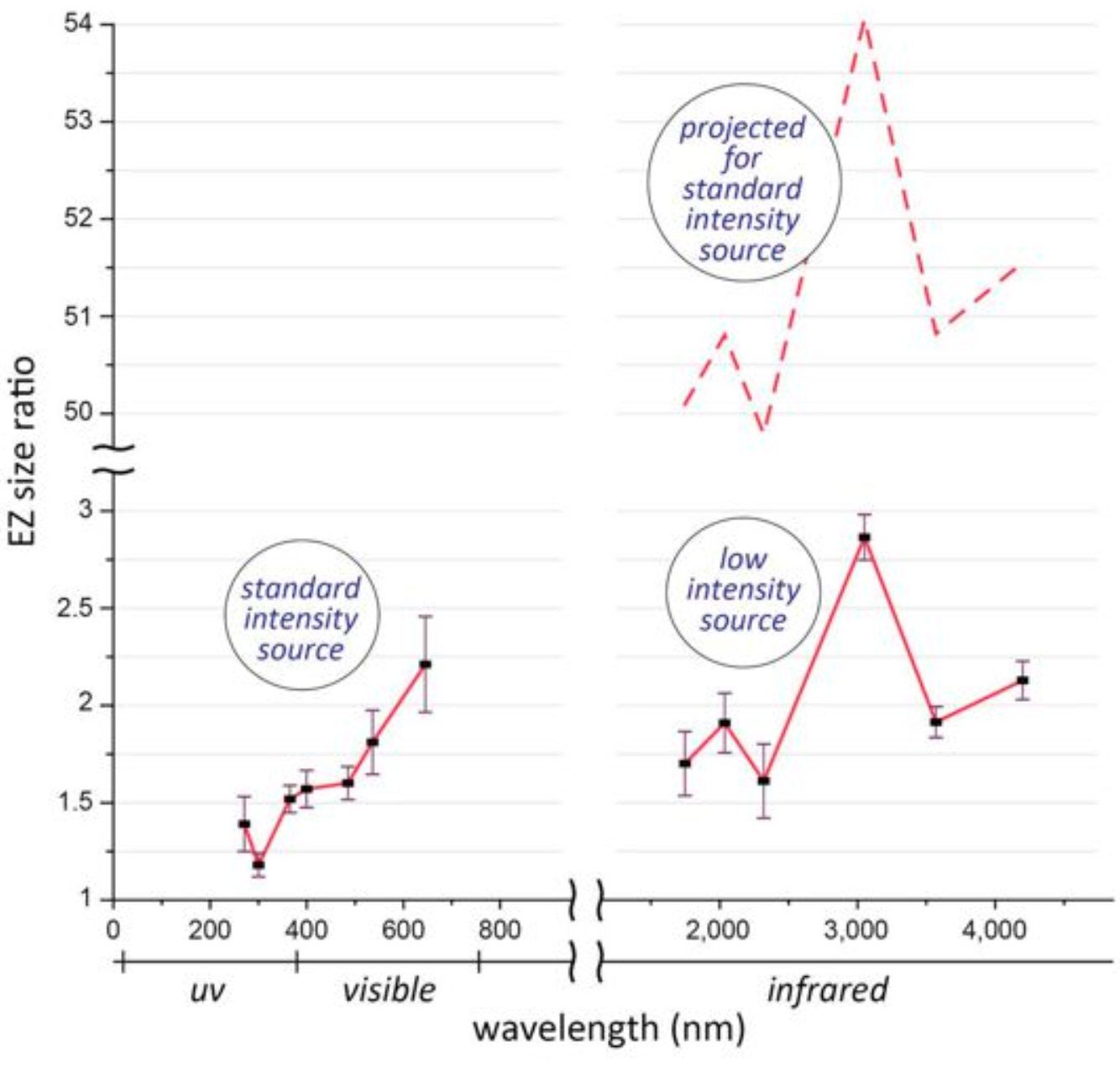
Note: the EZ size ratio quantifies how effective different types of energy are at creating liquid crystalline water.
Infrared is the most effective part of the spectrum at building liquid crystalline water, and it is also what LEDs lack. Relatedly, one proposed explanation for why red and infrared light increase mitochondrial energy production is that the light acts on the water bound within the mitochondria rather than on an enzyme.1
If we take a step back, this also suggests the body was designed to capture sunlight (which makes sense given how good sunlight feels for the body). For example, whenever you are in the sun, (likely due to the production of nitric oxide) the veins at the surface of the body will dilate and in effect make it possible for a significant amount of venous blood to receive the sunlight which can pass through the skin there. Likewise, since sunlight drives the production of liquid crystalline water and hence blood flow, this ensures that new blood is continually getting exposed to sunlight at the most superficial veins. Similarly, it also provides further evidence for the “wasted” energy in incandescent light bulbs is actually their most important part.
Note: the entire liquid crystalline water topic is discussed in more detail here.
Blood Conducts Light
Much of Ott’s work revolved around getting the light we needed inside the body. Parallel to this, a variety of other innovators discovered that bringing light inside the body (e.g., with a laser) yields a variety of meaningful benefits. Similarly, like Ott, they often found illness results from the body's inability to bring the light it needed into itself.
One of the oldest approaches to bringing light inside the body was to extract blood from the body and then transfuse it back in, exposing it to light (typically ultraviolet) before it had entered the body and thereby bypassing the barriers skin created to light entering the body.
When I started experimenting with this therapy, I began noticing that I would often see rapid improvements occur which seemed to be occurring too quickly for it to simply have been a product of the blood itself circulating through the body and affecting whatever it came into direct contact with.
Note: I have also observed this rapid change with a few other therapies (e.g., the previously mentioned exosomes), which I believe in part work through mitogenic radiation.
Since I noticed there were often immediate subtle physiologic changes one could notice once illuminated blood entered the body (alongside a subjective feeling of improvement within sensitive patients), I started experimenting with turning the external light source on and off midway through a treatment.
From this, I noticed that once a direct line of blood had been formed from where the light source was contacting the blood outside the body to where the blood entered the body at the IV site (but not before a connected circuit had been established, such as when the bloodless saline which had primed the IV was still emptying into the IV), there would be an immediate response in the patient (within a few seconds) to the light source being changed. I interpreted this to mean that blood could conduct light, and hence by illuminating one part of the circulation, it rapidly illuminated all (or most) of it.
Note: I also repeatedly tested this on myself and was able to verify under controlled conditions that I could tell when the blood outside my body was and was not being exposed to light.
Presently, I believe this conductivity is due to:
1. The secondary emissions of ultraviolet radiation from blood cells. Earlier for example I discussed how the researchers of MGR observed that exposing certain things within the body (e.g., blood) would cause them to emit MGR. Likewise, when blood is exposed to UV light and then placed in darkness next to photography paper which is sensitive to UV light, the photography paper will be exposed, indicating that the blood is emitting light.
2. Many living proteins function by transferring electrons from one place to another to facilitate the basic processes of life (for example, the electron transport chain is what mitochondria use to produce the energy which sustains the body). A class of circular biological models known as the porphyrins excel at this function (e.g., they are part of the mitochondrial electron transport chain), and as Arthur Fristenberg makes an extensive case for in chapter 10 of his book about the biological toxicity of EMFs, porphyrins effectively function as semiconductors and are used in the most critically important parts of the body (e.g., throughout the nervous system). Two of the most well known porphyrins are as follows:
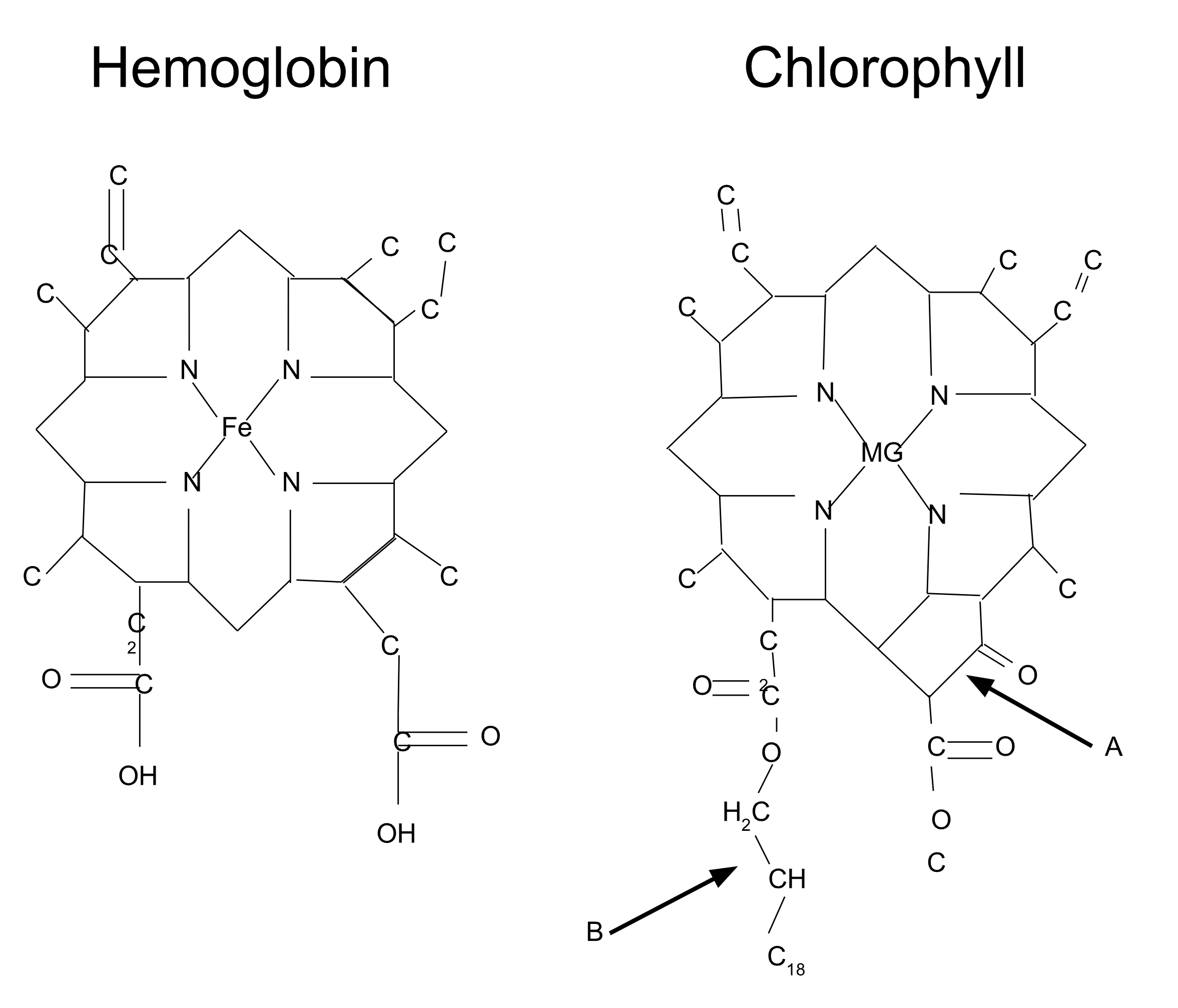
As chlorophyll makes it possible to extract the energy from sunlight and turn it into fuel, many have hence speculated hemoglobin can do the same, and it is my belief that it plays a critical role in allowing the energy from sunlight to transfer throughout the bloodstream. Likewise, others (e.g., Dr. Mercola) have concluded that a critical role of the mitochondria is to transfer and convert photons from sunlight into electrons that can be processed in the electron transport chain of the mitochondria and converted it into energy (ATP) the body can use.
The University College London group has independently arrived at several of these points. They attribute the harm from LED blue light to it being absorbed by porphyrins in the mitochondria (which then generate singlet oxygen), and have repeatedly found that light applied to one part of the body changes what happens elsewhere (e.g., red light on the back lowering blood sugar,1 or in an animal model of Parkinson’s disease, light directed at the abdomen or legs protecting the brain1), which they posit is because mitochondria signal each other through factors carried in the blood.1 Additionally, one of the most published melatonin researchers (and colleagues) has proposed that near infrared light, which reaches muscle, brain and bone, stimulates mitochondria to produce their own melatonin as an antioxidant, and hence that daytime sun matters as much for melatonin as nighttime darkness.1
Note: I believe other aspects of the body (e.g., the nerves and the physical correlates of the acupuncture channels) also conduct light.
3. Blood cells having a high absorbance of specific visible light and UV wavelengths. For example, to quote on study on red blood cell light absorbance:
The outstanding absorption peaks appeared at 416nm [long UV], 542nm [green], 578nm [yellow] in the absorptions curve of RBC, but there were also absorption peaks at 282 [UV B], and 345 mm [UV A]. The absorbance of RBC almost reached zero, and no characteristic absorption peaks between 600-800nm wavelength were observed.
Note: as this study shows, white blood cells also have a strong affinity for absorbing UV light (which likely underlies part of the therapeutic efficacy of ultraviolet blood irradiation).
Assuming blood indeed conducts light, this provides an important context to many of the ideas outlined thus far. For example:
•It explains why a localized administration of light can rapidly have a systemic effect throughout the entire body (something commonly observed when a light based therapy is utilized).
Note: I suspect this also applies to stem cell therapy.
•It explains the vital importance of sunlight exposure to the eyes. Since the eyes are by far the most transparent part of the body to light (e.g., the early pioneers of zeta potential evaluated it within the body by looking at the behavior of blood cells within the vessels of the eyes), the eyes serve as the gateway which allows sunlight to travel throughout the body.
•It explains why wearing glasses can be so incredibly problematic and why the ophthalmology profession's focus on preventing UV sun damage to the eyes is misguided.
•It helps to explain why many people observe significant benefits from practicing sungazing.
Note: while some individuals benefit from sungazing, the scientific literature contains many cases of people who damaged or lost their sight due to it (and I likewise have occasionally encountered someone this happened to—along readers sharing cases where DMSO healed it), so I believe it is often much better to simply get the eyes healthy natural light exposure throughout the day.
•It explains how mitogenic radiation can be precisely applied throughout the body and the significance of the optic nerve radiating mitogenic radiation into the brain once it’s illuminated by sunlight.
Note: in a previous article, I also discussed Russian research which shows how the heart is able to direct blood throughout the body to where it is most needed (e.g., to heal damaged tissue).
Conversely, it also raises another important question. What happens when this process is disrupted?
For example, a common observation in chronic illness is that one loses the ability to tolerate being exposed to the sun (either within their eyes or on their skin), and as I’ve read through the work of many pioneers of light therapy, I’ve noticed many of them felt those who most benefited from it were those who for one reason or another had partially lost the normal ability to metabolize external sunlight.
Similarly, we find one’s tolerance to sunlight (e.g., how long it takes them to develop a sunburn) dramatically improves as they undergo some type of restorative process to repair the body’s metabolism of sunlight. For example, as discussed in the previous article, unhealthy dietary changes appear to have played a key role in the body’s ability to tolerate sunlight, as when these nutritional issues are corrected, the body’s ability to tolerate sunlight often dramatically increases.
Note: generally speaking, the best approach to sunbathing is to do it around noon (as this is when the healthiest UV is present) and stop once your skin starts to show the initial signs of excessive exposure (e.g., white skin becomes slightly pink).
Presently, I’ve identified two models to explain why many have lost the ability to metabolize sunlight.
First (due to the properties of liquid crystalline water) the transference of light into the body relies upon the ability of blood (or interstitial fluid) to freely flow in the smallest vessels at the surface of the body so new fluids can continually be exposed to (and absorb) light they bring into the body. One of the most common things which impedes microcirculation throughout the body is a poor physiologic zeta potential, as once fluids begin to clump together, smaller pumps (such as the liquid crystalline water derived ones), no longer suffice to create a fluid flow within them. In turn, this leads to fluids at the surface of the skin becoming over exposed (e.g., overheated) and the surrounding tissue eventually experiencing a sunburn from that excessive energy.
Note: I’ve long suspected this process going awry underlies many dermatologic conditions.
Secondly, as discussed above, it’s very possible a key function of the mitochondria is to absorb the energy of photons and convert them into energy the body can use. If the mitochondria are unable to adequately perform that function (which sadly is often the case as mitochondrial dysfunction is now one of the most common chronic illnesses in our society), that will result in a bottleneck occurring within their electron transport chain, which in turn creates both reductive stress, and the light’s energy needing to dissipate into another part of the body which is not designed to absorb it (which hence damages it).
Note: I’m presently not sure which of these models is more correct. Furthermore, due to how much they overlap with each other (e.g., people with complex chronic illnesses typically both have a poor zeta potential and mitochondrial dysfunction, and fixing one of these often improves the other), it’s very possible both are applicable.
Conclusion:
One of my longstanding beliefs is that whenever a cheap and widely available therapy exists, the medical system is incentivized to bury it, as lucrative markets emerge once its benefits are no longer there. Natural light is one of the clearest examples of this. Despite over a century of research supporting it, a wide range of medical devices which work by putting specific wavelengths of light into the body (the most remarkable of which, ultraviolet blood irradiation, is discussed here), and most importantly, people simply feeling better in natural light, its importance has been almost completely dismissed by the medical profession, and we have instead been subjected to ever increasing amounts of unhealthy light (often without any say in the matter).
Given how long this has gone on, I find it almost unbelievable that there is finally the political will to let us move back towards a healthier form of light. I am hence immensely grateful to Senator Lee for being willing to take this issue on, and to each of you, as your support for this publication is what has made it possible to bring forgotten sides of medicine like this one back into the public’s awareness. I sincerely hope each of you will take a few minutes to contact your Senators about S. 1568 (or Representatives about H.R. 3341).
To learn how other readers have benefitted from this publication and the community it has created, their feedback can be viewed here. Additionally, an index of all the articles published in the Forgotten Side of Medicine can be viewed here.
Back before the ban, I stockpiled a bunch of heavy duty incadescent bulbs since I hate fluorescent or LED ones!!!
I have been wondering how to hold class outside for my children. I need an outdoor whiteboard 😆
We have been opening the windows to let the sun stream in.
I love my incandescent chandeliers.