
This newsletter exists to help others, and as a result, I frequently receive correspondences from individuals with pressing questions I want to answer. Unfortunately, due to how much work goes into producing the material here, I simply no longer have the time to respond to most of those correspondences.
The best solution I’ve been able to come up with is to have monthly open threads where anyone can ask whatever is needed (e.g., any lingering questions from the previous month) so I could make a point to always reply to them (as having them all in a single place makes it easier to get to them and also possible for others with the same question to see that answer).
Each time I do a monthly thread, I try to tag it to a topic I’ve wanted to write about but I do not quite feel is enough for its own article. In last week’s article, since many asked, I shared some of my key perspectives on supplements, including that ideally for the body, nutrients (particularly minerals) should be gotten from your diet rather than in concentrated supplements. However, that can be tricky, especially if you do not live in an area where it’s possible to procure high quality produce grown locally in healthy soil. Fortunately, one food group bypasses the soil problem entirely and is readily available to us.
Seaweed
“Seaweed” is a catch-all for thousands of species of marine algae, grouped by pigment into browns (kombu, wakame), reds (nori, dulse, sea moss), and greens (sea lettuce). Lacking true roots, they absorb everything they contain directly from the surrounding seawater, concentrating minerals far beyond what land plants typically reach, something coastal cultures around the world each seem to have discovered on their own. For example:
•In Monte Verde, Chile, archaeologists found nine species of seaweed alongside medicinal plants in a settlement dated to roughly 14,000 years ago, which suggests they were used for both food and medicine.
•By the first centuries AD, Chinese medical texts were specifically documenting Sargassum seaweed as a treatment for goiter, a medicinal use still incorporated today.
•Greco-Roman remedies included seaweed in the treatment of gout, joint ailments, and venomous bites.
This recognition by ancient cultures across the world that had no communication with each other suggests seaweed provided unique health benefits that were tangible enough the simplest medical systems could recognize them. Modern nutritional science, in turn, shows they were onto something. One of the more remarkable demonstrations of this is in the gut: the intestinal bacteria of Japanese individuals carry genes for digesting the polysaccharides in nori that are absent in North Americans, and those genes were acquired directly from the marine bacteria that live on seaweed.1
Note: another extraordinary aspect of seaweed is how quickly it grows (e.g., the widely consumed species that make laver and nori are ready for their first harvest within 30-90 days of seeding, and then can have numerous successive harvests every 10-20 days1), along with the fact it can be grown across vast stretches of coastal water where nothing else is being farmed. As such, at a time when the nutrient content of our food supply keeps declining, one of the few foods able to make up the difference also happens to be one of the easiest and cheapest to produce at scale, both for people and for livestock.
Seaweed’s Nutritional Content
Sea vegetables carry an unusually broad spectrum of minerals and trace elements the body needs for basic physiological function, often at levels that dwarf what you’d find in land plants. Most contain vitamins A, C, and a range of B vitamins, and a handful are among the only plant-based foods on earth that provide meaningful amounts of B12 (e.g., a 2024 study found seaweed significantly improved B12 levels in vegetarians).
Note: high B12 seaweed contains the best forms of B121 and is also a rich source of (healthy) folate.1
Protein content swings anywhere from roughly 10% to over 40% of dry weight depending on species, and seaweed protein is complete, so all nine of the essential amino acids are present (the nine the body cannot synthesize on its own). Seaweeds are also low in fat and remarkably high in fiber and among the richest natural dietary sources of iodine.
Most importantly, since seaweed absorbs minerals directly from seawater rather than soil, mineral content in seaweed runs up to 100x higher per gram than land vegetables across the board (e.g., one study found nori has 3 times more bioavailable iron than spinach, gram for gram — and sea lettuce, 5 times more).
Note: land vegetables today measurably contain less calcium, iron, and other minerals than they did in 1950. While this is commonly attributed to the soil becoming demineralized (as the primary input given to soil is nitrogen, phosphorus, and potassium), decades of selective breeding to meet other priorities also plays a key role1—both of which are not applicable to seaweed.
Conversely, this also means that if seaweed is grown in contaminated water, it will pick up the contaminants present there, which has led to extensive debate on which brands and forms of seaweed are the best to eat, particularly since many of the ancient societies which cultivated seaweed did so at a time when there was much less lead in the oceans. This, I believe, argues for two key principles—getting seaweed from clean sources and not consuming them in excess but rather treating them as a complementary part of a complete diet.
Note: one of the most common concerns with seaweed is its arsenic content. Data in this area is often misleading, as testing rarely distinguishes organic arsenic (which in seaweed exists mostly as arsenosugars and is far less toxic) from the significantly more toxic inorganic form. The main exception is hijiki, which contains a substantial amount of inorganic arsenic, so many guidelines (appropriately) caution against consuming it. For other seaweeds, preparation also makes a large difference: one study found that washing, soaking, cooking, and boiling reduced total arsenic content by up to 58.8%, 91.5%, 50%, and 60% respectively.
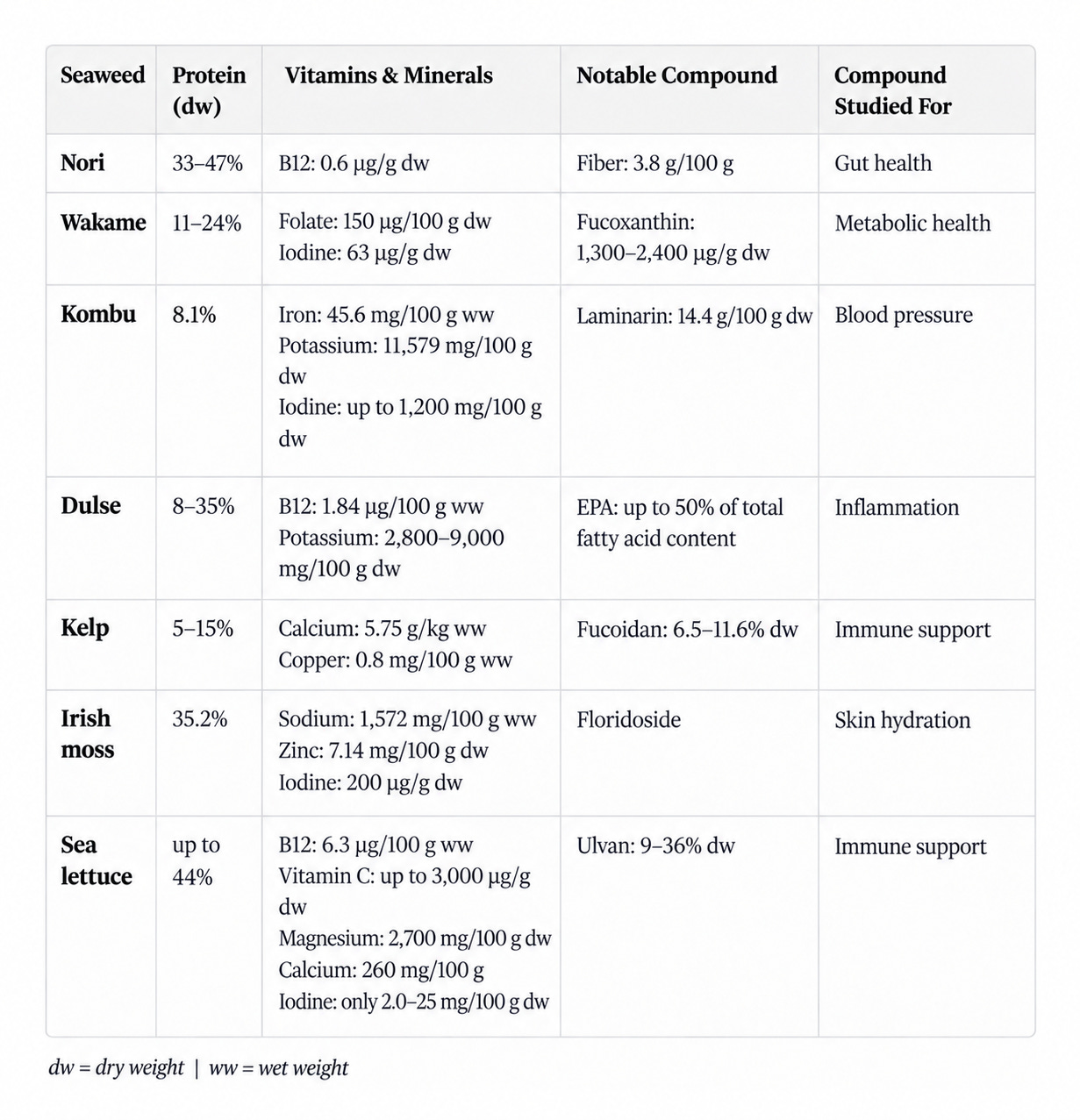
The key nutritional components of commonly consumed forms of seaweed are as follows:1,2,3,4,5,6
Nori — Comparable to beef liver on B12, tomatoes and lettuce on vitamin C, and bananas in fiber content.1
Wakame — A meaningful source of iodine and folate (which are needed for healthy fetal development), that also has a high fucoxanthin content that’s shown promise for metabolic health.1
Kombu (Kelp) — Among the strongest iodine accumulators of any living organism on Earth, with potassium and calcium levels that dwarf most conventional foods.1 Is also a natural source of fucoidan, a bioactive polysaccharide studied for its wide variety of therapeutic properties (particularly reducing pain and inflammation).1
Dulse — Exceptionally high in potassium and B12 for a plant, with EPA (a key fat in fish oil) making up to half its total fatty acid content.1,2 Particularly protein-rich when harvested in winter and early spring.1,2
Irish moss — High in protein (35% dry weight), with a favorable mineral profile and floridoside, the compound behind its use in natural moisturizers.1,2
Sea lettuce — B12 high enough on its own to exceed the full adult daily RDA, plus calcium covering over a third of an adult male’s daily need. Unusually low iodine for seaweed.1
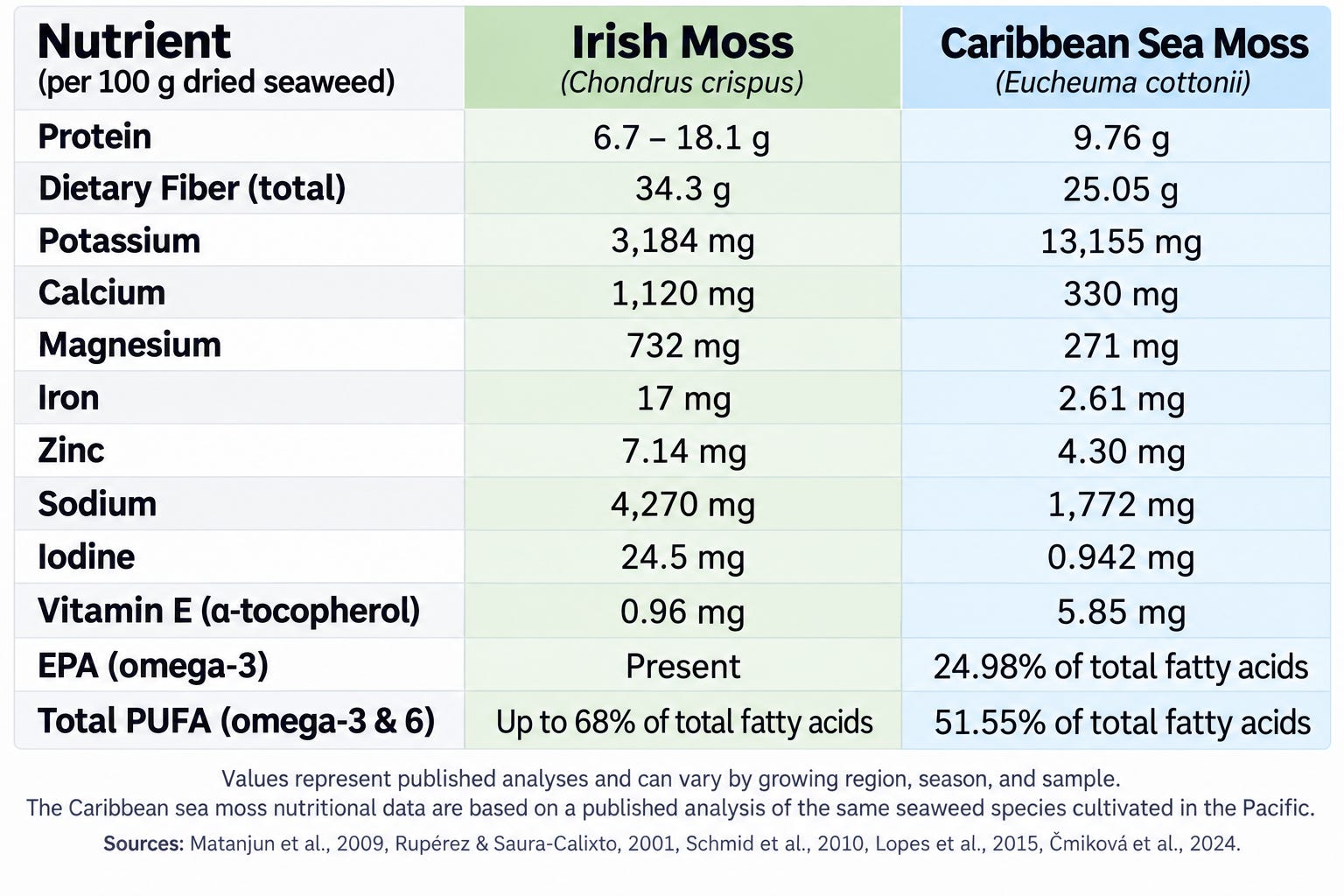
Caribbean sea moss — A diverse source of minerals and trace elements, with notable protein and EPA content.1,2
The Global Iodine-Deficiency Predicament
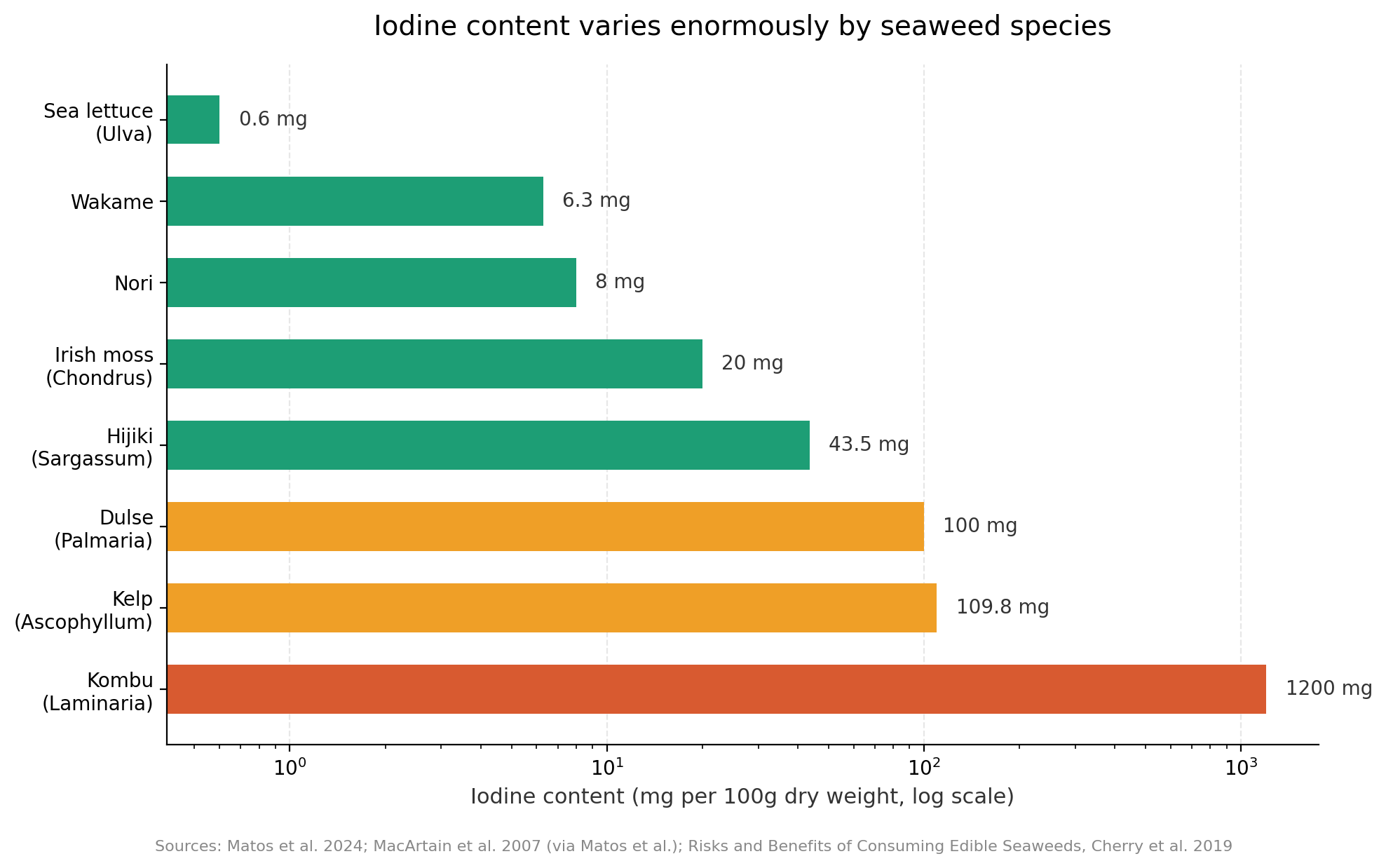
Seaweed is one of the richest natural sources on the planet of iodine (which the thyroid requires to function). Just a few grams a day can meet or exceed your entire daily requirement without supplements, fortified salt, or anything processed.
How many grams depends entirely on the species. Dried nori averages around 16 mcg of iodine per gram and wakame around 42, whereas kombu averages roughly 2,350 (and some kelp flakes exceed 8,000).1,2 As such, reaching the 150 mcg RDA takes about 9 grams of nori but less than a tenth of a gram of kombu, and a single gram of kombu delivers twice the 1,100 mcg US upper limit.
Note: because iodine is critical for health, to ensure the population received it, it is added to (iodized) salt. In contrast, most of the natural sources of salt—which I detailed here and believe are superior for your health compared to table salt due to their robust mineral content—do not contain significant amounts of iodine (which makes alternative dietary sources like seaweed important for individuals consuming them).
However, despite decades of widespread iodized salt initiatives, roughly 1.9 billion people (31% of the global population) still have inadequate iodine intake, and diagnosed deficiency cases rose about 23% between 1990 and 2021. Moreover, iodized salt itself isn’t the dependable dietary source most people assume: a 2008 study of US salt samples found iodine content ranging from 12.7 to 129 mg/kg against a labeled 45 mg/kg, with over half the samples falling below the FDA’s own recommended range.
Note: since other halogens (e.g. fluorine and bromine) compete with iodine, many have argued their widespread presence (e.g., via water fluoridation, perchlorate contamination of groundwater and food,1 or the switch from iodate to bromate as a dough conditioner) is responsible for the widespread functional iodine deficiency seen here. Supporting this, adequate iodine intake has been found to mitigate fluoride’s effects on the thyroid.1 Fortunately, California recently outlawed bromated flour, so this may at last be changing.
In the United States, the decline is visible in the national survey data. Median urinary iodine fell from 320 mcg/L in 1971–1974 to 145 mcg/L by 1988–1994 (with pregnant women since dropping further to 125 mcg/L),1 and more than 15% of American women of childbearing age now fall below 50 mcg/L (the level the WHO uses to define moderate deficiency in a population).1 A newer contributor is the move away from dairy, which at roughly 85 mcg per cup1 is the main source of iodine in most Western diets, as a 2017 analysis of 47 plant-based milks found most contained about 2% of the iodine in cow’s milk.1
Japan’s historically low goiter rate — as low as one case per million people — is attributed to heavy seaweed consumption. Compare that to the US today, where goiter affects roughly 1.3–2.5% of working-age adults, or 13,000 to 25,000 cases per million — a rate 13,000 to 25,000 times higher than Japan’s historic low, even after decades of salt iodization. At the same time, excessive iodine should also be avoided (e.g., subclinical and overt hypothyroidism is more common in iodine-sufficient, seaweed-heavy regions and in individuals with chronic iodine deficiency, a sudden increase can create hyperthyroidism), which is why intake and preparation methods are essential.
Traditional cultures that ate the most seaweed also utilized practices that kept the dose in a sustainable range. The best example is kombu. Since its iodine is water-soluble, boiling kombu for 15 minutes removes up to 99% of it,1 so kombu that is boiled and then eaten (as many traditional preparations are) carries a fraction of what the dried strip did. Conversely, that iodine ends up in the water, making dashi (the broth made by simmering kombu and then discarding it) a concentrated source, with kelp-based soups measured at anywhere from 165 to 7,750 mcg per serving.1 The Japanese also eat kombu sparingly (roughly half a gram per person per day) and typically alongside soy and cruciferous vegetables, both of which reduce how much iodine the thyroid takes up.1 None of this context made it into the Western conversation about seaweed, where kombu is often eaten whole or swallowed as kelp tablets.
Note: Indigenous Mesoamerican cultures processed corn with limewater (nixtamalization) before eating it, which makes niacin bioavailable. Skipping this step results in pellagra, a niacin-deficiency disease that killed thousands across the American South and Europe into the 20th century.
Human trials, in turn, have tested whole seaweed providing roughly 475–1,320 mcg of iodine per day for up to eight weeks without causing thyroid abnormalities, exceeding the European upper limit in some cases while remaining below Japan’s 3,000 mcg upper limit. This hence indicates that, while high, the iodine levels in seaweed are not a risk if it is consumed appropriately.
Isolated iodide, however, has not shown the same margin. In a four-week randomized trial of healthy adults, subclinical hypothyroidism began appearing at 400 mcg per day of supplemental iodide (in 5% of participants) and reached 47% at 2,000 mcg,1 which is why the American Thyroid Association advises against iodine or kelp supplements above 500 mcg per day.1 The people who need to be most careful, though, are those with existing thyroid disease (e.g., Hashimoto’s, Graves’, or thyroid nodules), in whom excess iodine can tip the gland into either hypothyroidism or hyperthyroidism.1 Similarly, high seaweed intake can cause or worsen symptoms in individuals with thyroid autoimmunity, and the transient hypothyroidism and iodine-induced goiter seen in Japan typically reverse once seaweed is restricted.1 Likewise, daily kombu was found to suppress thyroid function in healthy Japanese adults until it was stopped.1 If you have a thyroid condition or take thyroid medication, I would hence stay with the low-iodine seaweeds (e.g., nori and sea lettuce) unless someone is monitoring your thyroid.
Iodine’s Overlooked Role in Women’s Health
A strong case can be made that iodine deficiency underlies many different chronic illnesses, and in my own experience, iodine is one of the trace minerals that, when correctly supplemented, most commonly provides a tangible improvement in health.
Classically, iodine is viewed as necessary for the thyroid (as thyroid hormone contains iodine), so many of the core functions of thyroid hormone (e.g., fetal and infant brain development, growth, metabolic rate, heart rate, body temperature) go hand in hand with sufficient iodine.
Since iodine is essential, many tissues in the body preferentially accumulate it. Beyond the thyroid, these include the breasts, ovaries, placenta (for the fetus), prostate, uterus, gastric mucosa, salivary glands, thymus, skin, and eye. Deficiency in each produces its own signature (e.g., a dry mouth from the salivary glands, or dry skin that cannot sweat).1
Note: this same concentrating mechanism is why potassium iodide tablets are distributed during nuclear emergencies. Radioactive iodine falls on pastureland, cows eat the grass, and it concentrates in their milk — the thyroid can’t differentiate between radioactive and regular iodine, so drinking contaminated milk can cause a toxic overload. After Chernobyl, childhood thyroid cancer cases in Belarus jumped roughly 45-fold, largely traced to contaminated milk. Potassium iodide works by pre-emptively flooding the thyroid with safe iodine so it does not accumulate radioactive iodine.
Women bear the brunt of this. Breast tissue places a large additional demand on the body’s iodine, and estrogen has been found to inhibit iodine absorption (whereas testosterone promotes it),1 which likely explains why thyroid disease is several times more common in women than men.
This is most clearly seen with fertility. Research has found that even mildly iodine-deficient women take longer to become pregnant (with a 19.4% reduction in the likelihood of conceiving each cycle), other research has linked more severe deficiency with greater reproductive difficulty, and a small 2025 pilot study found iodine supplementation improved markers of egg quality in women with diminished ovarian reserve, which is especially noteworthy as more women choose to start families later in life. In the United States, an NIH study of 467 women trying to conceive found 44% were moderately to severely deficient, and those women were 46% less likely to become pregnant in any given cycle.1
More importantly, once a woman becomes pregnant, the fetus depends entirely on her iodine for its brain development. Severe deficiency during pregnancy causes cretinism (profound intellectual disability, along with impaired hearing, speech, and motor control), two separate meta-analyses found iodine-deficient populations have a mean IQ 12 to 13.5 points below iodine-sufficient ones, and controlled trials in Papua New Guinea, Zaire, and China found that correcting the deficiency before or during early pregnancy eliminated new cases of cretinism entirely and raised children’s developmental scores by 10-20%. Nor is this confined to the developing world, as in a British cohort, children whose mothers were even mildly deficient during pregnancy scored lower on verbal IQ and reading at age 8.1
Outside of pregnancy, one of the most common consequences of an iodine deficiency is goiter, where the thyroid enlarges (making it appear as though there is a tumor in the neck). Notably, a similar process also occurs with the breasts and ovaries (which David Brownstein helped bring attention to). For example, iodine deficiency was found to produce fibrocystic-like changes in mammary tissue in animals, while studies of women with fibrocystic breast disease have repeatedly found over half of those given iodine showed substantial improvements in breast pain and fibrosis. In the best controlled of these, a randomized, double-blind trial of 111 women, 3–6 mg of iodine per day (but not 1.5 mg) significantly reduced breast pain, tenderness, and nodularity over six months, with no dose-related adverse events.1
Furthermore, iodine used to enter the American diet through two sources that have since shrunk or disappeared: iodine-based disinfectants in milk production and iodate dough conditioners in commercial bread, which in 1980 bread makers replaced with bromide. As those sources vanished, US dietary iodine intake fell by roughly half — a period during which fibrocystic breast disease by some estimates rose from about 3% to 90% of American women. Breast cancer rates in Japan are roughly 66% lower than in the United States.1 Likewise, well-documented migration studies have found that Japanese women who emigrate to the US see their breast cancer risk climb over successive generations until it approaches that of US-born women, which has led some to hypothesize that fibrocystic breast disease, some breast cancers, and even uterine fibroids are in part iodine-deficiency disorders.
As these fibrocystic changes precede cancer, I have long suspected a key reason why men get prostate cancer and women get breast cancer is that the glands are unable to get the minerals they need, and over the years, I have seen numerous approaches show varying degrees of success in treating cancer (or pre-cancerous changes) with appropriate supplementation.
Note: DMSO has shown remarkable and consistent efficacy for a variety of eye diseases (detailed here), including “incurable” macular degeneration. One of the only other approaches I have ever seen treat macular degeneration gave high doses of the nutrients and minerals the eyes needed, which has led me to speculate that these degenerative processes can result either from insufficient dietary sources of the nutrients needed, or from a functional nutritional deficiency (where inadequate blood flow prevents enough of the nutrient already present within the blood from reaching the target tissue). Supporting this, older manipulative literature reported goiter improving once the blood supply to the thyroid was improved, and the DMSO community has found many glandular disorders throughout the body responded to topical DMSO combined with iodine.
David Brownstein, the physician who has arguably done the most work in this area, in turn has reported that properly testing for and resolving iodine deficiencies within his own patients (e.g., with a high-dose iodine protocol) has:
Rapidly resolved fibrocystic breast disease, often within two to four weeks. One nurse had spent 15 years having cysts drained at a university breast clinic and was contemplating a bilateral mastectomy. A month after starting iodine, her breasts were soft and pain-free, and her mammograms later normalized.
Eliminated ovarian cysts, and improved or reversed cysts and nodules in the uterus and thyroid, which he found typically takes three to six months.
Shrunk breast tumors in women who had declined conventional care, when iodine was given as part of a broader nutritional program. In one woman, a PET scan six weeks after she raised her dose showed her metastatic tumors necrosing from the center. In another, the tumors had “diminished considerably” on ultrasound at 18 months, and her mammogram and ultrasound were later read as normal. In a third, the cancer did not progress over three years and the lesions slightly regressed.
Restored fertility. For example, a 42-year-old with two miscarriages in the previous two years, who was excreting 22% on his iodine loading test (he treats 90% as sufficient), conceived shortly after starting iodine and described it as the easiest pregnancy of her life.
Shifted estrogen metabolism toward estriol, the weakest estrogen and the least stimulating to breast tissue (which Jonathan Wright also observed). Conversely, iodine deficiency increases both ovarian estrogen production and the sensitivity of the breast’s estrogen receptors.
Mobilized bromide. In a small in-office comparison, his breast cancer patients excreted roughly twice as much bromide as women without cancer, and that excretion rose further once they started iodine.
Improved a range of other conditions, most notably autoimmune thyroid disease. In his initial series, 92% of his Hashimoto’s and Graves’ patients were iodine deficient by his testing, and he reports nearly all improved dramatically once that was corrected as part of a broader program. For example, a Graves’ patient who had refused radioactive iodine saw her hyperthyroid symptoms resolve within four weeks, and a Hashimoto’s patient’s thyroid antibodies normalized over six months. Roughly a third of his hypothyroid patients also needed to lower their thyroid hormone dose, and he has described decade-long daily headaches, chronic fatigue, brain fog, and psychiatric symptoms lifting once the deficiency was addressed.
Of the more than 6,000 patients he has tested, over 96% were deficient by his loading test, and he favors a high-dose approach (significantly exceeding the RDA). He has also reported the problems that come with these doses: palpitations in sensitive patients that resolved once the dose was cut, TSH elevations that can persist for up to six months, and detox reactions as bromide is displaced. For this reason he advises doing this with an iodine-literate practitioner rather than alone, and not starting it mid-pregnancy without one.
Note: in the literature, the fibrocystic response has held up in controlled trials and the fertility link in cohort studies, whereas the rest of Brownstein’s observations (including his loading test and the doses themselves) has never been put to a controlled test.
Supporting Metabolic Health
The salt in seaweed makes some people worried it can raise blood pressure. Beyond this link being unsubstantiated, seaweed actually gently normalized blood pressure.
Note: the link between salt intake and blood pressure is typically non-existent (whereas avoiding salt for “health” causes a wide range of issues)—all of which is detailed here.
Specifically, peptides found in dulse, nori, and wakame have demonstrated activity against the renin-angiotensin system, including ACE inhibition—the same blood-pressure-regulating pathway targeted by common ACE-inhibitor medications (the class of blood pressure medications which overall provide the greatest therapeutic benefit). These seaweed peptides hence help blood vessels relax, easing circulation and lowering blood pressure.
Dulse peptides have also demonstrated direct renin-inhibitory activity, suggesting that seaweed proteins may influence multiple steps in the blood-pressure-regulating process. Importantly, these peptides are naturally present in the whole seaweed, meaning you don’t need to purchase an expensive isolated peptide product to incorporate them into your diet.
Of the three, wakame has particularly compelling human evidence. In a randomized, double-blind study, consuming 4–6 grams of dried wakame per day resulted in a 10.5 mmHg reduction in systolic blood pressure at the 6-gram dose, about the equivalent of a tablespoon—or what you’d add to a bowl of miso soup.
Seaweed has also shown promise for normalizing blood sugar. In one trial, participants with type 2 diabetes eating a kombu-wakame blend for four weeks saw postprandial glucose drop from 254 to 203 mg/dL, along with lower triglycerides and increased HDL. In another, wakame eaten with a meal lowered both glucose and insulin within 30 minutes in people with untreated type 2 diabetes.
Brown seaweeds also contain compounds that inhibit alpha-amylase and alpha-glucosidase, enzymes responsible for breaking down carbohydrates, potentially slowing glucose absorption after a meal. Fucoidan, one of its isolated compounds, has also been shown in diabetic animal models to lower fasting blood glucose and improve insulin sensitivity. A 2023 meta-analysis of human studies found that brown seaweed consumption improved postprandial glucose, HbA1c, and markers of insulin resistance overall.
Seaweed Nutraceuticals
While I generally prefer consuming seaweed—and most things—as a whole food, there are cases where isolating and concentrating one of its compounds makes sense, particularly when you want amounts that would be difficult to obtain through diet alone. Brown seaweeds are the source of several compounds now sold as concentrated extracts, three of which are particularly interesting:
Fucoidan: A sulfated polysaccharide that has attracted significant research interest for its anti-inflammatory, antioxidant, anticoagulant, and antiangiogenic activity. It has also been investigated for antitumor effects. Most notably, kombu has been used in Chinese medicine for over a thousand years to treat edema (a symptom of kidney disease), and in 2003 China approved a kombu-derived fucoidan capsule (Haikun Shenxi) for chronic renal failure. A review of 15 years of its clinical use found that across 50 papers and 2,130 treated patients, 87% improved on kidney function markers versus 65% of those given routine treatment alone.1
Note: these results are for extracted fucoidan rather than whole kombu, whose potassium content is a problem in advanced kidney disease, and since fucoidan is an anticoagulant, concentrated extracts do not belong alongside blood thinners.Fucoxanthin: It has been studied for anti-inflammatory and anticancer activity, as well as its effects on fat metabolism, including triglycerides, liver fat, and fat absorption.
Alginate: A natural polysaccharide with an especially interesting application for acid reflux. In the stomach, alginate-based formulations can form a floating gel-like “raft” over stomach contents, creating a physical barrier that helps keep acid away from the esophagus rather than suppressing stomach-acid production. Human trials and a meta-analysis of randomized studies have found alginate-based therapies can improve GERD symptoms. Alginate also binds strontium: in a 1966 human study, 1.5 grams taken with a meal halved the absorption of radioactive strontium without affecting calcium, making it the fallout counterpart to potassium iodide.
Sea Moss
The Caribbean Irish moss drink dates back to the 1800s, with its origins commonly traced to Irish laborers and immigrants who brought their tradition of preparing Irish moss to the Caribbean, where locally available seaweeds such as Gracilaria came to be used instead. Back in Ireland, Chondrus crispus had become an important famine food, helping sustain impoverished coastal communities during the potato famine.
This concoction became a sustained piece of Caribbean culture, cooked with milk, vanilla, and spices, and taken for general vitality and male libido. In recent years, it’s gained a new spotlight in wellness circles as “sea moss gel”, a longevity tonic and superfood, particularly marketed for its mineral density and its reputation for vitality and libido support.
Studies on sea moss have documented its mineral, amino acid, and omega-3 content, along with demonstrated antioxidant activity and prebiotic effects, including increases in beneficial gut bacteria and short-chain fatty-acid production.
Making the gel yourself is straightforward and far more economical than buying pre-made jars. The ability to soak it and blend it into a nearly tasteless gel also makes it one of the easiest ways to consume seaweed. A traditional Jamaican preparation combines sea moss with spices and milk.
Lastly, Irish moss is also the source of carrageenan, a food additive some avoid due to its potential to worsen bowel inflammation or past reaction to it.1 While this same issue has not yet been reported for Irish moss, caution should be exercised if you already avoid carrageenan.
Note: if you wish to prepare this, look for dried sea moss with clear sourcing, sustainably harvested and sun dried, and ideally, tested for heavy metals. That said, there’s less concern with heavy metal exposure here since the finished product is a diluted gel and at the recommended serving of 1-2 tablespoons a day, you end up consuming a small fraction of the concentrated dry-weight numbers even if the source sample tested high.
Sourcing Your Seaweed
One of the major challenges with moving to a healthy diet is that junk food succeeds because it appeals to core food desires that are hard to find in the healthier alternatives. For example, to help patients struggling to quit, I spent years searching for a healthy alternative to potato chips (eventually finding one that was easy enough to make at home many found it allowed them to make the transition). For this reason, seaweed has become immensely popular as a “potato chip substitute.” Unfortunately, most of the existing seaweed brands are loaded with bad oils, to the point they are arguably worse than the chips they replaced.
For this reason, I’ve put quite a bit of work into trying to identify the best brands of seaweed to consume (for the various reasons one would be interested in). In the final part of this article (which serves as an open thread for you to raise any questions which have accumulated over the past month), I will cite what are presently the healthiest (and tastiest) seaweed brands on the market, how to make sense of the conflicting data on their metal content, and answer a few of the common questions about iodine supplementation.
