
Story at a glance:
For 50 years, medicine has waged a misguided war against critical sources of health like salt and sunlight while avoiding discussing the real causes of diseases. Because of this, the dangers of salt are relentlessly focused on despite evidence not supporting them.
In parallel, the extreme dangers of consuming too little salt are rarely discussed in the medical field—despite dangerously low sodium being one of the most common conditions seen in hospitalized patients, and chronically low sodium greatly increasing one’s risk of dying.
The war against salt originated from the belief salt raises blood pressure—despite the evidence showing it doesn’t.
Many of the foundational beliefs around high blood pressure are not supported by the existing data, leading to situations where patients are routinely medicated to blood pressures far below what is safe, significantly reducing their quality of life and increasing their risk of severe injuries or death.
Salt restriction creates many similar complications to dangerously low blood pressures (e.g., fatigue, lightheadedness, erectile dysfunction). Because of this, many find their health and energy dramatically improves once they start consuming healthy salts.
This article will cover some of the key dangers associated with salt restriction and strategies for locating the healthiest natural salts.
This newsletter exists to help others, and as a result, I frequently receive correspondences from individuals with pressing questions I want to answer. Unfortunately, due to how long each article takes to write (e.g., I’ve spent most of the last two weeks finishing up the last part of the DMSO neurological series as I believe it’s vital that astonishing data becomes widely accessible), I simply no longer have the time respond to most of those correspondences.
The best solution I’ve been able to come up with is to have monthly open threads where anyone can ask whatever is needed (e.g., any lingering questions from the previous month) and I would make a point to always reply to them (as having them all in a single place makes it easier to get to them and also possible for others with the same question to see that answer).
Each time I do a monthly thread, I try to tag it to a topic I’ve wanted to write about but I do not quite feel is enough for its own article. In this article, I will focus on one my major frustrations with the medical system, the half a century war against salt (which began in 1977 when a Senate Committee published dietary guidelines arguing for reduced sodium consumption despite the existing evidence not supporting this). Since then, like many other bad government policies, it has developed a nearly unstoppable inertia of its own.
Note: in the recent interview I did with Pierre Kory, one of the key points I hoped to illustrate was that on highly contentious issues, middle ground positions often exist which achieve most of what both side is seeking and help everyone—but as things become increasingly politically polarized, both sides dig in and the common sense solutions fade into the background creating an irresolvable quagmire. For example, currently, there is a highly polarizing debate occurring over what should happen to a mother with postpartum depression who murdered her three children, as a large number of people are adamant the death penalty must be imposed while many others have made it clear they deeply emphasize with her stress and hence want an insanity defense to prevail. Yet, few have mentioned the violent psychosis inappropriate psychiatric medications cause (which may have played a key role here) or that much better non-pharmaceutical options exist for treating postpartum depression (e.g., decades ago William Walsh showed postpartum depression and psychosis was often caused by a copper overload that was highly responsive to treatment).
Is Salt Bad For You?
Many people you ask, particularly those in the medical field will tell you salt is bad, and one of the most common pieces of health advice given both inside and outside of medicine is to eat less salt.
Over the years, I’ve heard two main arguments for why salt is bad for you.
First, salt raises blood pressure, and high blood pressure is deadly, so salt is too and should be avoided.
Second, with individuals who have heart failure, eating too many salty foods will create exacerbations of their condition, and as a result, after holidays where people eat those foods (e.g., the 4th of July) more heart failure patients will be admitted to hospitals for heart failure exacerbations.
Note: excessive sodium causes these exacerbations because an excess amount of fluid accumulates in the body (e.g., because the weakened heart can’t move enough blood to the kidneys to eliminate it), which then overloads other parts of the body (e.g., causing swelling and edema, which, if in the lungs, can be life threatening).
Because of these two things, many in the medical field assume that salt must be bad for you and hence strongly urge patients to avoid it (to the point you often see an elderly patient who loves her salt be aggressively pushed into abandoning it). Unfortunately, the logic behind those two arguments is much less solid than it initially appears.
Blood Pressure
Many things in medicine resulted from what approach to patient care was the most profitable, not the most helpful. In turn, since recurring revenue is a foundational principle of successful businesses, rather than cure patients, a key goal in medicine often ends up being to have as many patients as possible be on lifelong prescriptions.
In most cases, the drugs that are developed and approved have real value for specific situations, but those situations are not enough to cover the exorbitant cost it requires to get a drug to market. As a result, once drugs are approved, the industry will gradually come up with reasons to give them to more and more people (e.g., by relabeling a vast swathe of normal feeling as “depression”). As such, things quickly arrive at the point where many of the industry’s customers experience significantly greater harm than benefit from the pharmaceutical (e.g., while they harm the majority of users and providing minimal benefit to most patients, SSRI antidepressants are also very helpful for a subset of people who take them).
One classic way drug markets are expanded is by creating a drug that treats a number, asserting that the number has to be within a certain range for someone to be healthy, and then once that is enshrined, narrow and narrow the acceptable range so less and less people are “healthy” and hence need the drug (e.g., this happened with cholesterol once statins were invented). Likewise, this characterizes the history of blood pressure management:

Because of this, many people (particularly the elderly) are frequently pushed to excessively low blood pressures which reduces critical blood perfusion for the organs—which is particularly unfortunate as high blood pressure is often a symptom of poor circulation rather than its cause. As such, reducing the remaining circulation by lowering blood pressure then makes them significantly more likely to get a variety of significant issues (e.g., kidney injuries, cognitive impairment, macular degeneration), the most studied of which is lightheadedness or fainting leading to (often devastating) falls. Additionally, blood pressure medications also often greatly reduce one’s quality of life (e.g., by causing fatigue or erectile dysfunction).
Note: for those interested in learning more about the great blood pressure scam (a lot of what we’re taught about blood pressure is less than accurate), it can be read here.

Low Sodium
A corner stone of cementing the blood pressure market has been to make everyone terrified of salt (much in the same way making people terrified of the sun is a cornerstone of the lucrative skin cancer treatment market—despite the fact the deadly skin cancers are actually due to a lack of sunlight).
Remarkably, much like the great dermatology scam (which has been able to make a massive amount of money from removing cancers that almost never become life threatening) the link between blood pressure and salt consumption is actually quite tenuous.
For example, the most detailed review of this subject found that drastic salt reduction typically results in less than a 1% reduction in blood pressure. Likewise, doctors rarely recognize that patients in the hospital are routinely given large amounts of IV 0.9% sodium chloride, in many cases receiving ten times the daily recommended sodium chloride we are supposed to consume—yet their blood pressure often barely rises.
Note: much of the confusion with salt and blood pressure arises from the fact changes from salt-reduction are only seen in a minorities of the population (e.g., certain ethnicities), leading to the average change across everyone being very small. Likewise, a larger Cochrane analysis of this question found that cutting salt by roughly 4.4 grams a day lowered blood pressure by about 5.4/2.8 mmHg in hypertensives but only 2.4/1.0 mmHg in those with normal blood pressure (a rounding error you could achieve by relaxing for a few minutes).
Despite this, patients are often pushed to eliminate all (or almost all) salt from their life “to prevent them from dying.” Beyond this significantly reducing their quality of life (as people like salty foods) it can be dangerous. For example:
•A study of 181 countries found countries with lower salt consumption have shorter life expectancies.
•Low sodium levels (hyponatremia) are strongly correlated with a risk of dying (e.g., the salt consumption target we are recommended to follow increases one’s risk of dying by 25%). Likewise, a common reason for hospital admissions, are symptoms resulting from hyponatremia (as once sodium levels get too low, it can be very dangerous), and 15-20% of hospitalized patients have low sodium levels at admission.
Note: mild hyponatremia is also associated with an increased risk of death—even “mild” low sodium raises five-year mortality by 25%, and in a database of 2.3 million patients it independently predicted death. It also leaves the elderly nearly six times more likely to break a hip in a fall (which is frequently catastrophic).
•Reduced salt consumption, not surprisingly, increases one’s risk of hyponatremia (e.g., one study found salt restriction made hypertensive patients 9.9 times more likely to develop hyponatremia).
Note: in addition to dietary salt reduction, many blood pressure and psychiatric medications put you at risk for dangerously low sodium levels (e.g., SSRI antidepressants make you 3.16 times more likely to). Additionally, certain patients (e.g., those with autonomic nervous issues) are much more sensitive to salt restriction causing hypotension (low blood pressure).
• Low dietary sodium intake causes a 34% increase in cardiovascular disease and death.
•Rapidly lowering blood sodium levels reduces cardiac output and blood pressure in a manner resembling traumatic shock (which frequently raises the heart rate as the heart tries to compensate for insufficient blood). Low salt consumption, in turn, has been repeatedly linked to tachycardia (and atrial fibrillation).
Remarkably, while this is rarely prioritized in medicine, there is simultaneously a well-recognized physiologic mechanism for it. When the body senses insufficient sodium, it defends its blood volume by activating the renin-angiotensin-aldosterone system and the sympathetic nervous system—the same stress machinery that raises the heart rate (and patients take blood pressure medications to block). So, in exchange for a tiny blood pressure reduction, salt restriction was found to significantly raise plasma renin, aldosterone, adrenaline, noradrenaline, cholesterol, and triglycerides—trading a trivial drop in one number for a rise in the very hormones and lipids that drive cardiovascular disease. This is worse in the elderly, whose aging kidneys respond poorly to changes in blood sodium and are thus at greater risk for hyponatremia following sodium deprivation.
Note: three of the most common symptoms of hyponatremia (which lead people to go to the Emergency Room) are fatigue, confusion and difficulty concentrating.
•Chronic sodium depletion has been linked to fatigue and insomnia.
•Many readers have reported discovering low salt consumption was the cause of their fatigue and lightheadedness (which has also been proven in a clinical trial which treated postural orthostatic tachycardia syndrome with increasing dietary sodium).
Note: chronically low blood pressure (e.g., POTS) has been shown to be one cause of chronic fatigue syndrome,1,2 and POTS is often treated with increased dietary sodium (e.g. the autonomic disorder consensus guidelines formally recommend it).

•A variety of other health issues (e.g., worsening of diabetes or a stomach hydrochloric acid deficiency) have also been linked to insufficient dietary sodium. For example, a review of 23 trials found low-salt diets consistently produced insulin resistance, and one study induced it in healthy people in as few as 7 days.
•Beyond the acute confusion of hyponatremia, there is now emerging evidence that chronically low sodium intake harms the aging brain. A 2025 longitudinal study of over 1,500 older adults found that those in the lowest sodium intake quintile (around 1,764 mg/day—right about where public health targets try to push people) experienced faster decline in global cognition, especially memory, compared to those eating a moderate amount. Likewise, low sodium intake was also associated with more tau tangles (a hallmark of Alzheimer’s pathology) on autopsy, while high sodium intake was not linked to faster decline in this cohort.
Note: the suppressed causes and treatments of Alzheimer’s disease are discussed further here.
The Forgotten Side of Medicine is a reader-supported publication. To receive new posts and support my work, consider becoming a free or paid subscriber. To see how others have benefitted from this newsletter, click here.
U-Shaped Curves
Much in the same way I have observed extreme positions on either side of a political issue will frequently cause problems for the society (as they prevent a healthy balance from ever being found), frequently in physiology, a number will be observed which, when improved, appears to correlate with improved health, leading to the assumption as much as possible should be done to improve that number. In many cases however, at some point, the effect reverses, and it becomes harmful to further increase or decrease that number.
For example, with blood pressure, a few data points showed that if it’s too high, it increases one’s risk of death, so this was used to create a linear model which extrapolated that trend to much lower blood pressure values.
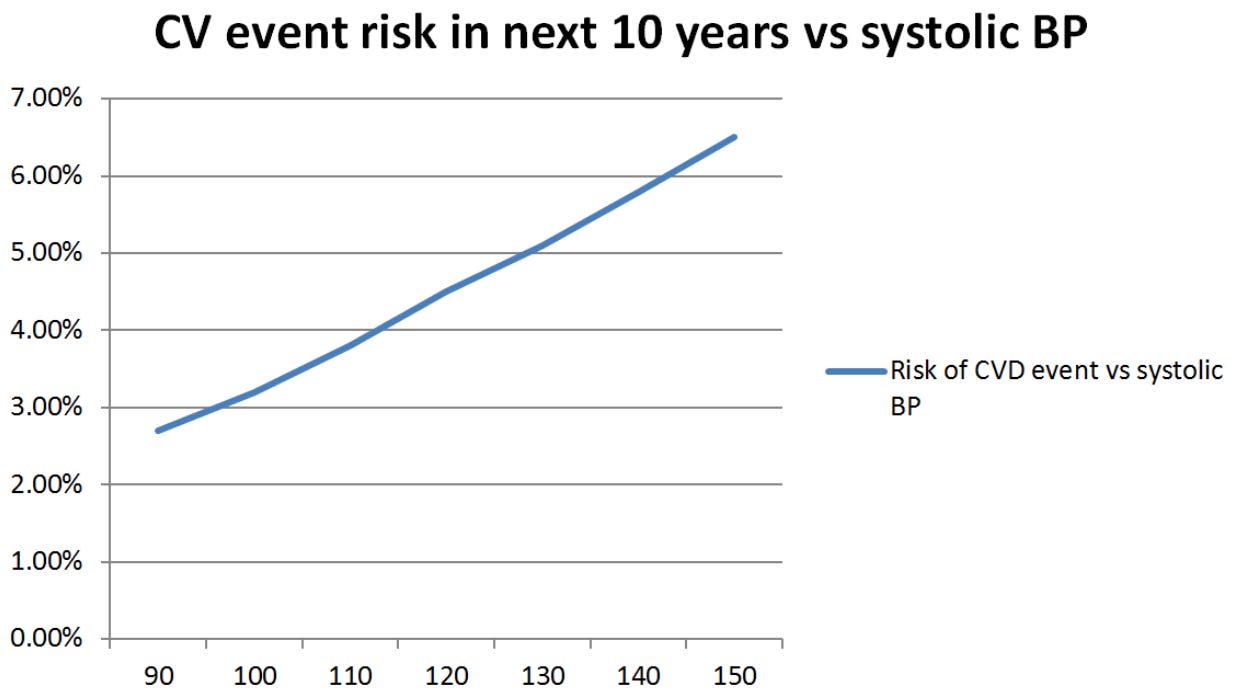
Yet, in real life, once blood pressure gets too low, the trend reverses and one’s risk of dying increases rather than decreases.

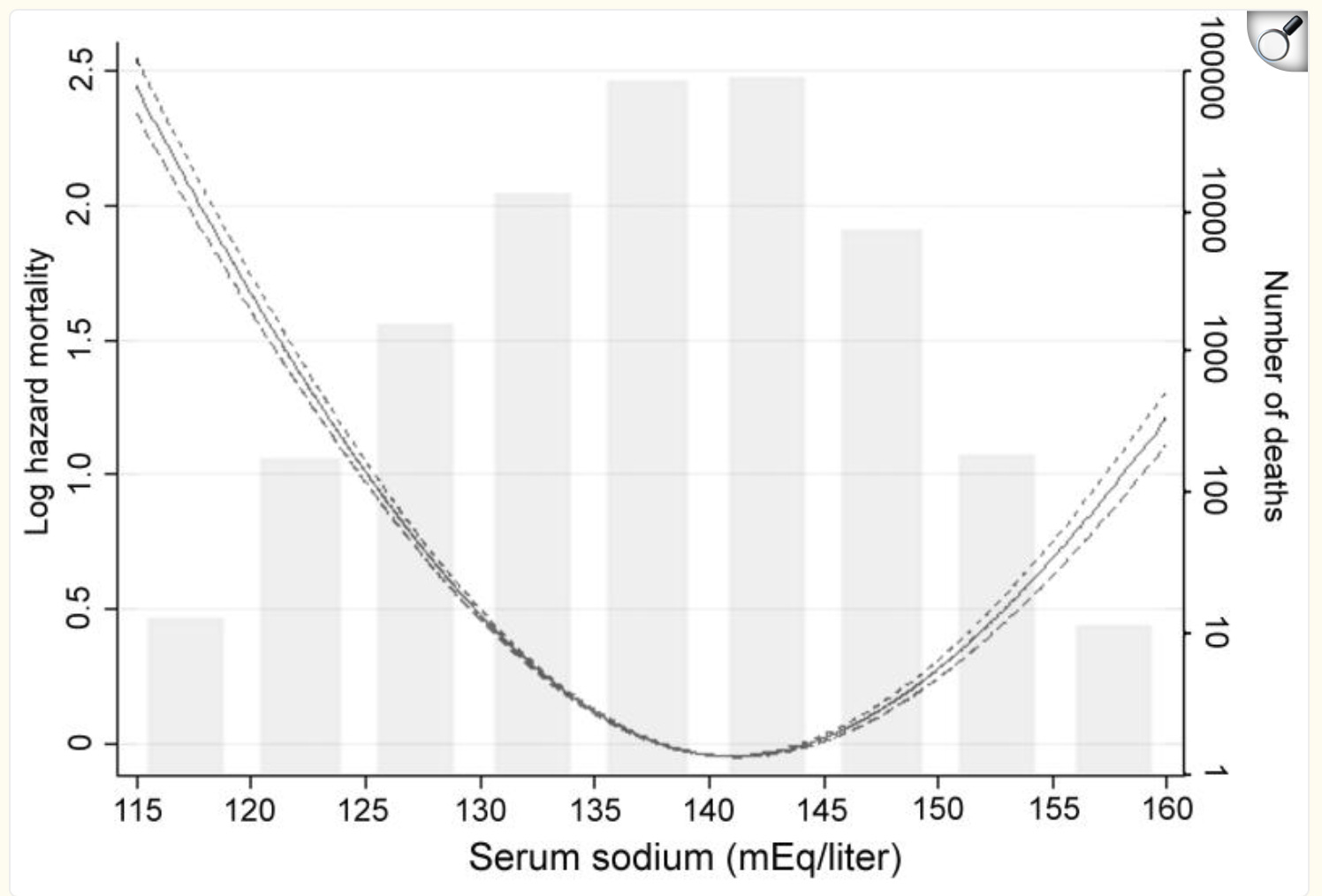
Likewise, both high and low sodium diets have been shown to increase the risk of death. This U-shaped curve was best demonstrated in a study of chronic kidney disease and heart failure patients:
Further corroborating the U-shaped curve for sodium input, a study of 100,000 adults across 18 countries, found the same U-shape, with the lowest risk of death and cardiovascular events at a moderate intake of roughly 3–5 grams of sodium per day and rising risk at both lower and higher intakes (a pattern a follow-up study further corroborated), along with also finding that higher potassium and a lower sodium-to-potassium ratio predicted lower mortality.
The same U-shape even appears when sodium is measured directly in the blood, where a study of 32,666 patients found mortality was lowest at a serum sodium of 139–144 and rose at both lower and higher levels. Finally, most recently, a 2025 national Chinese cohort of nearly 271,000 adults confirmed the U-shape for cardiovascular mortality, with the lowest risk near 4.6–5.4 grams of sodium per day. Additionally, that study identified much of the increased risk of death from low sodium resulted from elevated heart rates and blood glucose—both well-known (but rarely discussed) effects of salt avoidance.
Sodium in Heart Failure
Due to excessive sodium consumption causing heart failure exacerbations, heart failure patients are often (dogmatically) told to avoid dietary sodium, despite there being many cases of them improving once they add some salt back into their diet (as they had been on the left side of this curve). While this has long been known within the integrative health field, in the last few years, data at last is emerging to support this (along with the U-shaped mortality curve in sodium consumption):
A 2018 systematic review of 9 trials found no evidence that salt restriction reduced deaths, hospitalizations, or hospital stays in heart failure patients.
The largest trial to date, (a 2022 one of 806 patients across six countries), found that cutting sodium to under 1,500 mg/day did not reduce deaths, hospitalizations, or emergency visits compared to usual care.
A 2024 review concluded that across the randomized trials, restricting dietary sodium does not reduce clinical events in heart failure patients—and that strict restriction (1,500 mg/day) offers no advantage over moderate intake, with some data hinting a looser 2,000–3,000 mg/day may carry lower mortality.
A 2026 meta-analysis of 16 randomized trials (roughly 2,260 heart failure patients) found sodium restriction associated with higher all-cause mortality (a 50% increase) and markedly higher cardiac mortality, with the harm most pronounced in the sickest patients and when restriction was combined with fluid restriction and diuretics.
In light of this data, while American medicine still clings to the low sodium dogma, Europe fortunately is beginning to rescind salt restriction recommendations for heart failure patients.
Zeta Potential Curves
When fluid contains suspended particles (which is true for most fluids in nature), those colloids can either have finely dispersed or clumped together particles. One of the primary determinants of this is the electrical repulsion or attraction between the particles, something quantified by a system’s zeta potential and heavily influenced by the charges present in a solution (e.g, too many positive charges will make fluid components like blood cells clump together and is why the aluminum in vaccinations frequently trigger microstrokes of varying severity). In turn, many diseases result from poor zeta potential, including poor circulation and fluid congestion or edema (e.g., that seen in heart failure).
One critical aspect of zeta potential is that it follows a U-shaped curve in relationship to the amount of a charged ion present, with both too little or too much of it being problematic.

Note: giving IV sodium infusions to hospital patients will frequently greatly improve their condition, something nonchalantly attributed to everyone being “dehydrated” but more accurately due to their blood sodium being too low to adequately support the physiologic zeta potential. Likewise, many people often feel much better after getting outpatient saline infusions at concierge hydration clinics.
This in turn helps to explain why too little salt (e.g., through intentional sodium restriction or unintentional sodium restriction through a diet that puts you into ketosis [which increases sodium excretion]) can be problematic while at the same time high salt diets can be problematic as well.
With high salt diets (the other end of the U-shaped curve), I believe a few points are particularly important to recognize:
1. I’ve had multiple cases where I ate fairly salty foods right before bed, then woke up feeling extremely dry throughout my body with a fast heart rate. Through trial and error I figured out drinking certain waters would help me feel better. Later, from reading Thomas Riddick’s work on zeta potential, I understood what was happening and measured the conductivity in my urine, showing that my kidneys indeed were trying to dump a large amount of sodium and restore my zeta potential. Riddick, tracked many cases where more severe versions of what I experienced resulted in cardiovascular incidents (as poor zeta potential causes blood to clot together and triggers heart arrhythmias as the heart struggles to push this congested blood).
Note: numerous readers here have reported zeta potential restoring protocols has fixed their atrial fibrillation.
2. Riddick (and those who followed him) found that processed foods and many restaurant meals tended to be problematic for zeta potential and hence advised reducing the frequency of their consumption (e.g., I try to minimize eating out because of the congestion I feel after restaurant meals).
Note: since there are so many other harmful things in processed foods, it is very possible many of the issues associated with salty foods are due to something else that is present in it (e.g., seed oils or questionable food additives).
3. Riddick believed one of our key issues with salt was that potassium was better for zeta potential than sodium, so by switching our potassium based sources of salt (e.g., vegetables) for highly salted foods, we were creating an unhealthy balance between the ions. Likewise, modern research has shown adequate potassium alongside sodium is critical for cardiovascular health (e.g., normalizing blood pressure), with a recent trial of 21,000 people finding that simply replacing ordinary salt with a 75% sodium / 25% potassium substitute (not reducing salt intake, just rebalancing it) led to 14% fewer strokes, 13% fewer major cardiovascular events, and 12% fewer deaths.
Note: potassium deficiency causes a variety of issues (e.g., fatigue and muscle cramps) and many practitioners over the years have found supplementary potassium greatly helps their patients.
4. In general, I noticed most of the salt overload issues individuals run into come from eating foods high in refined salt (e.g., salty processed foods) rather than those consuming natural salts. This has led me to suspect that a major issue with salt is either something else present in the processed foods or something specific to processed salts. At this point, my best guesses is that it is due to refined salts:
•Lacking minerals we otherwise need for homeostasis
•Containing other problematic additives (e.g., refined salt tends to clump together so it requires anti-caking agents, many of which adversely affect zeta potential).
•Having a refinement process that introduces unhealthy chemicals to the salt (e.g., sodium carbonate, sodium hydroxide, barium chloride or barium carbonate are used to remove minerals besides sodium from refined salt).
Note: salt bleaching or heating may also be problematic.
Healthy Salt
Since salt is such an integral part of our life, I frequently receive a variety of questions on which type of salt we should consume. In the last part of this article (which exists as an open forum for you to ask any questions you have), I will share what I’ve learned from years of exploration on this topic, which brands of salt we prefer, the other critical steps for ensuring salt is compatible with health and invite each of you to share what you have discovered from your own exploration of salt.
